

The Alchemist subclass for Artificers gets an update in Eberron: Forge of the Artificer, but is it enough to compete with flashier toys?
The humble alchemist may be a tried and true fantasy archetype. Long before D&D, there were weirdos looking to transform lead into gold. It makes sense, then, that alchemy would lend itself to the magical tinkering and experimentation that is the Artificer base class. And in the new big book o’ Artificers, Eberron: Forge of the Artificer, we get a look at the Alchemist, updated for D&D 5.5E.
Which, to be frank, the Alchemist has kind of needed. In 5E the Alchemist was one of the lesser-picked subclasses, mostly due to lackluster or inefficient subclass features that made the Alchemist’s turns feel a little light compared to the other Artificer options. Now, WotC looks to change some of that. But do they pull it off?

The Updated Alchemist – You Actually Probably CAN Handle Its Strongest Potions
At its core, the updated Alchemist is the “party support” subclass for the Artificer. This is the subclass you take when you want to brew up potions for your allies who are going into battle. (Whether or not you go on to write Challengers is up to your performance check). Mechanically, this means you’ll have a lot of tools to deliver buffs to your party. But in playing with the “alchemy” theme, you also have debilitating, life-leeching concoctions.
In other words, it’s entirely possible your strongest potion could kill someone. But that’s more because it’s just a big old magical ball of deadly acid. In fact, there’s quite a bit of acid damage in the updated Alchemist’s list of Alchemist Spells. In addition to party benefiting spells like Healing Word and Death Ward, you’ll get Melf’s Acid Arrow, Vitriolic Sphere, and Cloudkill, among others.
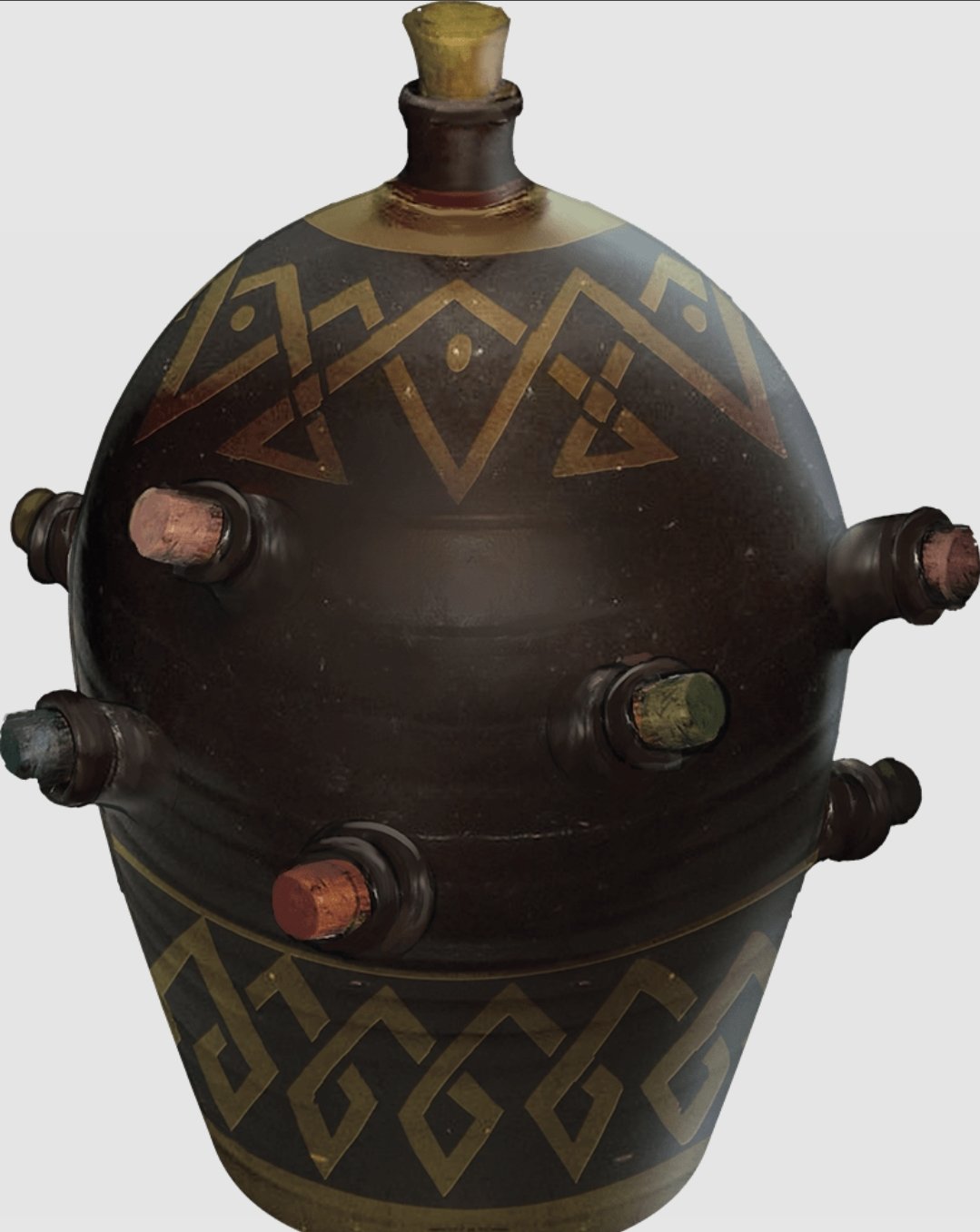
As an Alchemist, you’ll specialize in giving life and leeching it away. With acid. But let’s talk about the giving life. The core feature of the Alchemist is Experimental Elixir. Starting at level 3, you gain the ability to brew up two magical concoctions with random effects for free. These magical elixirs have one of five different effects that can enhance whoever drinks them:
- Heal the drinker for 2d8 + Intelligence modifier hit pointss (increases to 3d8 and 4d8 at levels 9 and 15)
- Increase the drinker’s speed by 10 feet for an hour (15 and 20 feet at levels 9 and 15)
- Grant a +1 bonus to AC for ten minutes (or 1 hour at level 9 and 8 hours at level 15)
- Bless the drinker with an extra +1d4 to all attack rolls and saving throws for the next minute (10 minutes at level 9, 1 hour at level 15)
- Give the drinker a fly speed of 10 feet (or 20 feet at level 9 and 30 feet at level 15)

It’s not a bad list of boons, all things considered. It takes a Bonus Action to drink the potion, and an ally can drink one of them or you or whoever is holding them can administer them to someone within 5 feet for the same cost. It’s a twice per day “better healing word” if you think about it. Especially since you can also spend a Magic Action and a spell slot (any level) to create more Elixirs, and you get to pick what effect they have.
But it’s one that, even with the upgrades, seems to stagnate once you make it out of the earliest levels. These are all the elixirs you can make (with that feature – you can still brew up your own potions in half the time per the DMG, thanks to your other level 3 feature Tools of the Trade).

But what else do you get for your trouble? Well, as an Alchemist at level 5, you gain Alchemical Savant. This lets you add your Intelligence modifier as a bonus to any spell you cast that does Acid, Fire, or Poison damage, or to any health you restore from your spells. It’s a nice boost, you’ll use it all the time. But that’s all you get until level 9.
At level 9, you learn Restorative Reagents, which lets you cast Lesser Restoration without needing a spell slot and without preparing the spell. You can do that up to your Intelligence modifier times per day. And this is probably the most disappointing feature – it’s not actively bad. But all it does is let you get rid of a condition (which make no mistake, is a lot more valuable in 5.5E, especially with monsters having ‘on-hit’ effects with no save). But compare that to literally every other Artificer subclass, which sees a much more significant upgrade to the things they do, and it starts to pale quite a bit in comparison.
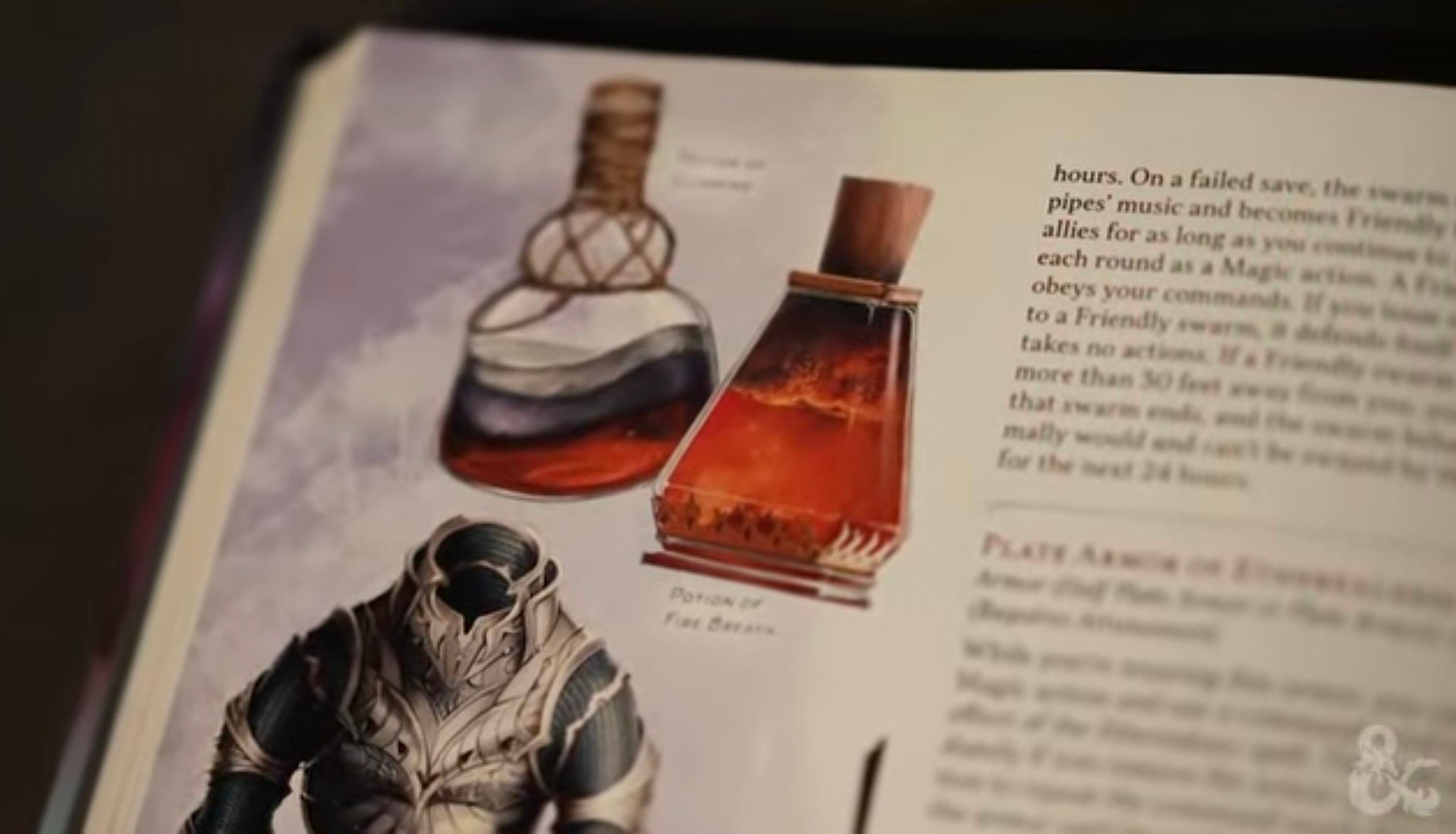
Honestly the updated Alchemist still suffers in comparison. It doesn’t have the flash or the “hey this changes your playstyle significantly” that others do. It feels too timid, in terms of mechanics, to me. Case in point, even the level 15 capstone feature Chemical Mastery only gives you a mild boost. You can deal 2d8 extra Force damage once per turn whenever you deal Acid, Fire, or Poison damage, and you gain resistance to Acid and Poison (and immunity to the poisoned condition) and you can cast Tasha’s Bubbling Cauldron once per rest for free.
But it doesn’t make you feel like a potion-swilling, reagent tossing battle-chemist. It feels too laborious, while other subclasses just get to do the thing. Again, I don’t think it’s mechanically bad – just a little underwhelming. I know I’d be houseruling it if I were running with it in my games. Still, for the right party – and with the right preparation, an Alchemist can keep a whole party going without needing the resources of a Cleric or the like.
Check out the Alchemist and four other Artificer subclasses in Eberron: Forge of the Artificer!
Please note that BoLS may earn a commission when you purchase through links on our site.
Don’t Miss:

Read more at this site