

Games Workshop is introducing a new Campaign option for 40k with the release of 500 Worlds: Titus – War on the Vespator Front.
I know that campaigns aren’t everyone’s cup of tea when it comes to how to play your games of Warhammer: 40,000. But that’s okay! Because there are folks out there that DO play to the more narrative style and like these campaign structures that GW makes. If you’ve got a dedicated group or maybe a store-run campaign, then this upcoming 500 Worlds Campaign structure might be perfect for you!
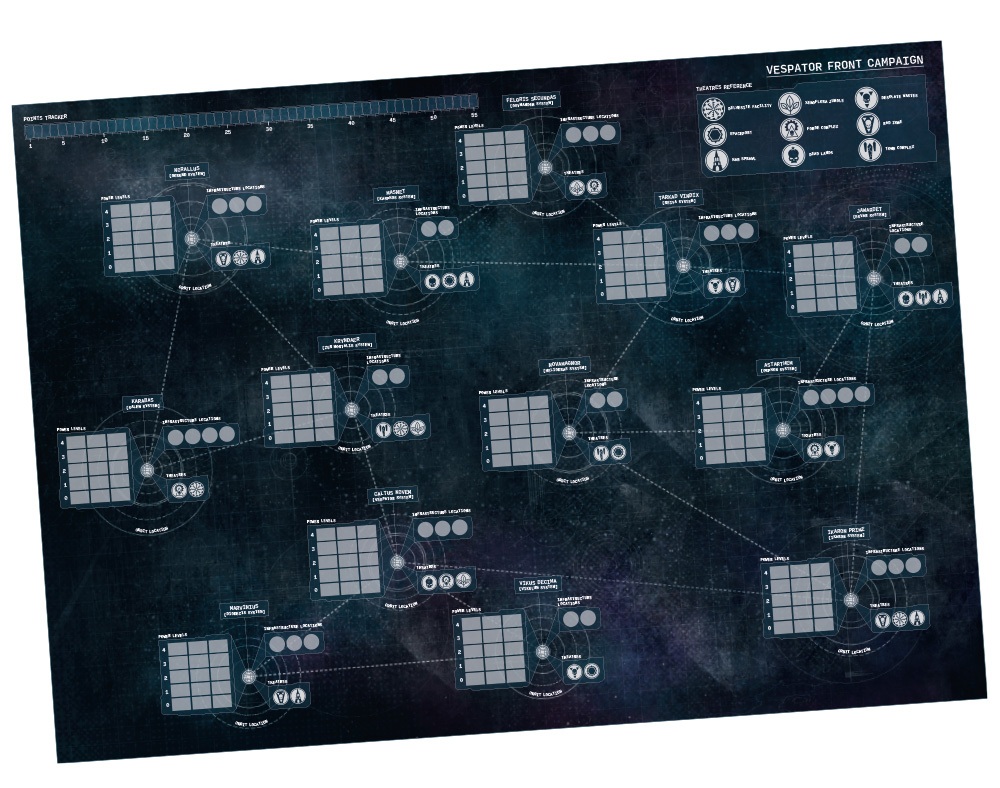
The 500 Worlds: Titus set comes with a large fold-out campaign map to get you started, which is the perfect rallying point for your players when hung on a wall or spread across a table. Here you’ll see all of the systems you’ll be fighting across in a typical Vespator Front campaign*, with all sorts of boxes to fill in with information as the story progresses.
As far as system maps go this one doesn’t have 500 worlds on it…but that’s okay. This is representing a specific front of the campaign. You’ll basically have three different alliances all battling over these systems for control. The team with the most systems under their control by the end of the campaign period will be the winner.
These alliances can vary and be setup by whatever works for your players. You might have a typical Imperial/Chaos/Xenos spread. Or you might have the Ad Mech leading their allies against the Adeptus Astartes while the Chaos forces use Xenos mercs — you get the idea. Allies can be customized to your group. Even if you don’t have enough for 3 teams, you can still run it — all of that has been sorted out by GW. So really, even if you can only get a couple of other players to commit, you’re go to play!
I think the concept is good. This one feels pretty open ended and you can track/replay it how your group wants to run it. That said, the specifics of the campaign are a tad more defined. So let’s get into those.
The 500 Worlds Campaign
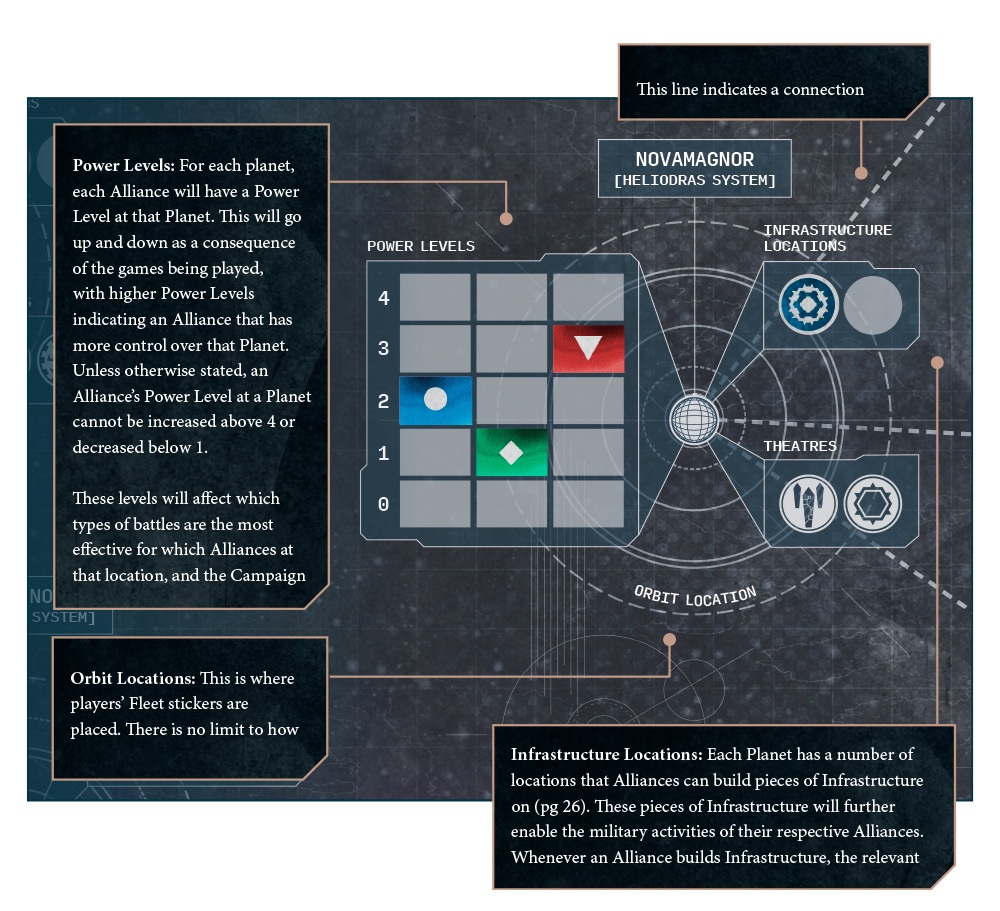
Each one of the zone is essentially it’s own system. Within that system you’ve got a few different things to help keep track. You can see the breakdown above. What I like about this is how each of the systems has their own Theatres to battle in. These can impact your games and also help shape the developing narrative. There’s also important Infrastructure Locations, too. These can help support your war campaigns as you move from planet to planet!
Obviously, if you’re opponent has a strategic planet or location, the best way to take it is to throw down the gauntlet and attack. But playing games isn’t the only way to progress your campaign. Moving your fleet around and really deciding your Operations is going to be a big part of the campaigning. But don’t worry — there will be plenty of battles. That’s also when you’ll get to experience some other curve balls…
New Challenges Await
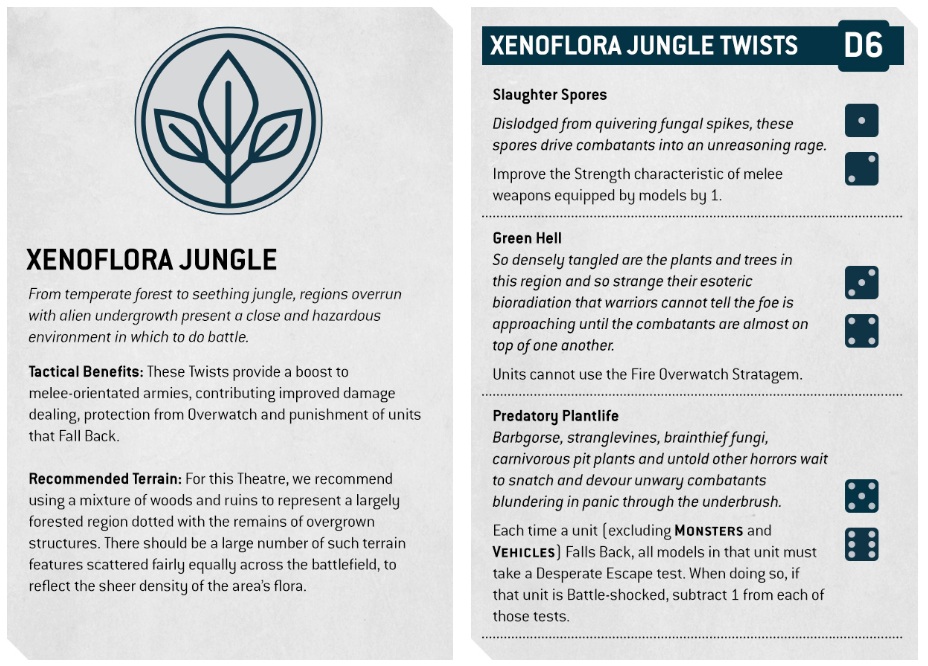
These sectors also have their own options for setting the table. There might be a Xenoflora Jungle you’re battling in and that has implications. You can read some of those above. What I also appreciate about this system is that there is recommended terrain to use. However, this isn’t set in stone — you can use what you have available.
Unlike Matched Play games using the Chapter Approved mission pack, the objectives in any given battle are decided by the player launching the attacking Operation, with each type of attack corresponding to one of the five new missions in the War on the Vespator Front book or the Boarding Actions rules from the Dread Incursions book.
One example that was provided was the Orbital Invasion. This represents an army coming down from Orbit via Drop Pods or other means. You can see the deployment zones below.
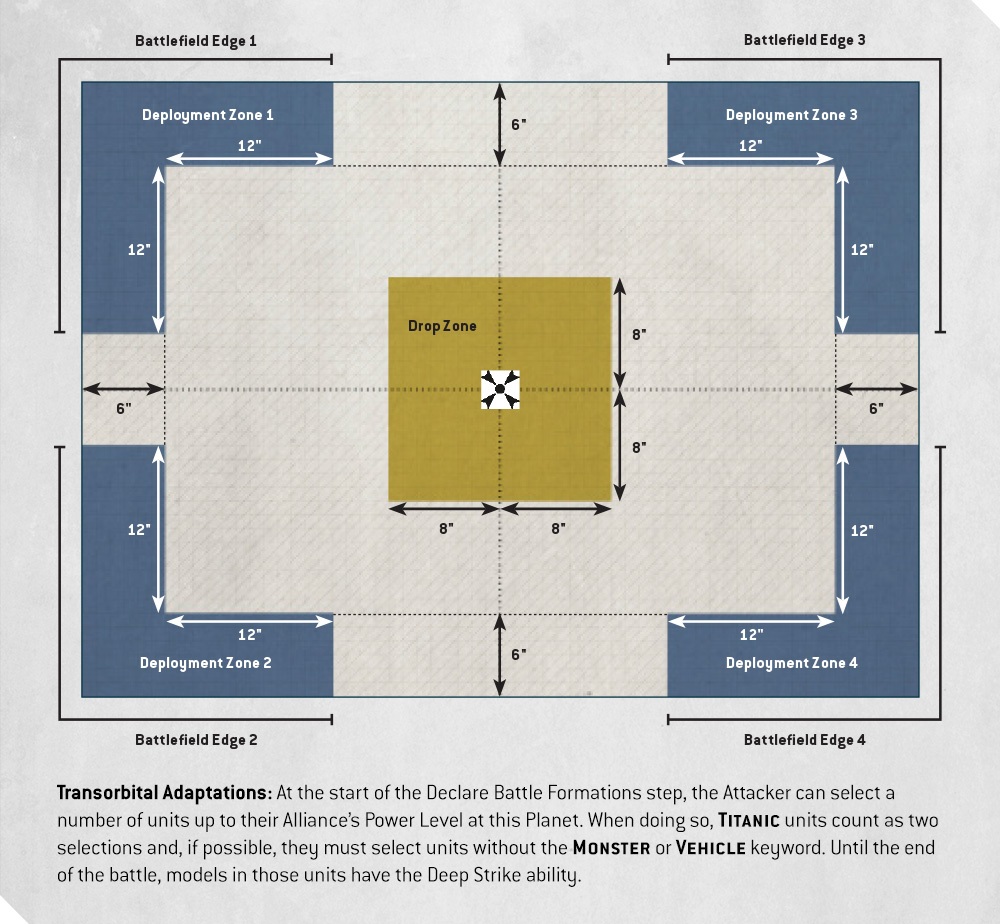
Personally, I really like these alternate options for the Campaign Missions. They can often times feel and play very different from a standard Matched Play game. But that’s kind of the point. These will challenge the attacker and defender in a very different way that a typical game. Plus you’re recording the results and it’s going to impact the campaign!
If you can find some like-minded players or if you’re just looking to change things up from always playing Matched Play, then give a campaign a go. One piece of advice I can give you is set a time limit on the campaign overall. Having been involved in campaigns before it’s best if you have a hard stop date in mind at the beginning. It could be a long weekend of gaming or it could be a multi-week affair. Either way, if you do it right, everything culminates in that final game and you can look back at a completed campaign.
Subscribe to our newsletter!
Get Tabletop, RPG & Pop Culture news delivered directly to your inbox.
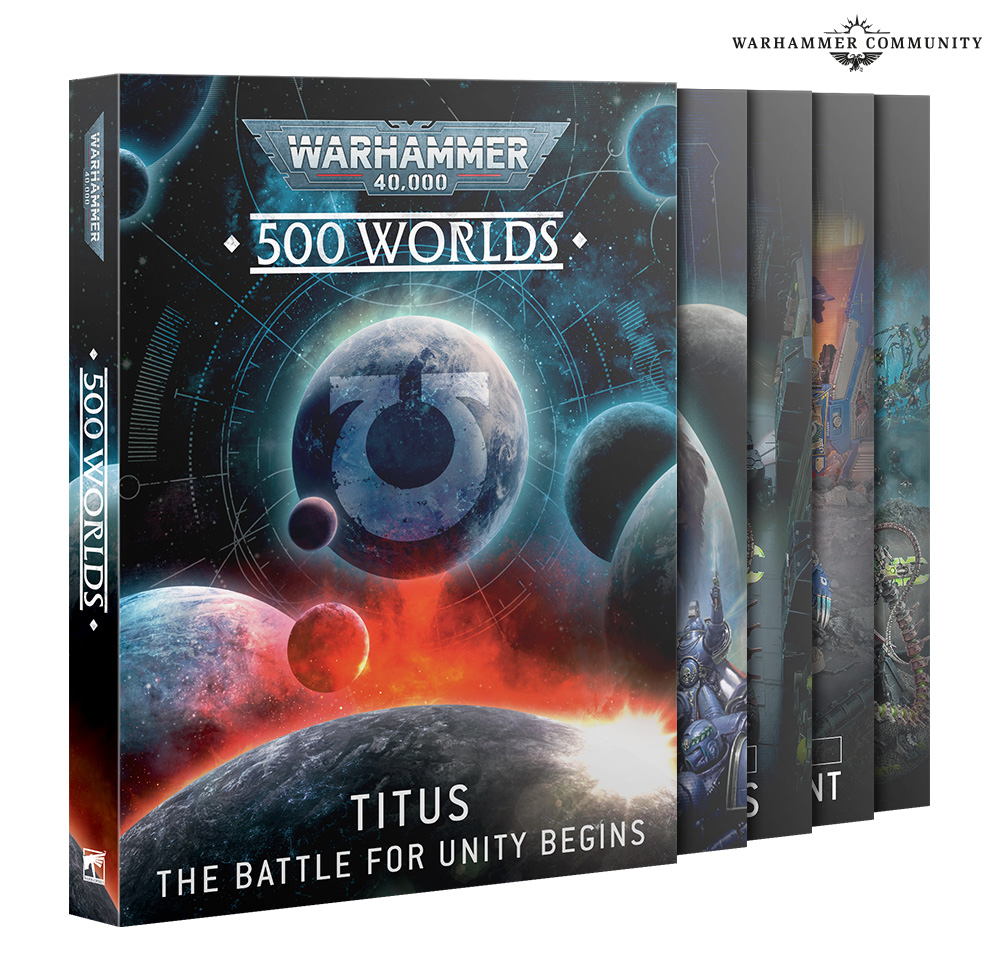
The 500 Worlds are coming to pre-order soon (like, this Saturday). Are you ready for a new Campaign?
Don’t Miss:

Writer, Editor, Texas Native, and now Tex-Pat, Adam covers all things Tabletop Gaming. Which includes Warhammer 40,000, Age of Sigmar, D&D, Board Games and everything else that involves dice, boards, cards and a table.
A hobbyist, player, and collector of miniatures and games, Adam’s current obsession are his Death and Chaos Armies for Age of Sigmar, his Blood Angels and Tyranids for 40k, an expanding collection of Marvel: Crisis Protocol minis, and his ever growing Arkham Horror: The Card Game Collection.
Read more at this site