

Five new subclasses, five new species, and a host of incredible boss monsters await you in Heliana’s Guide to Monster Hunting: Part 2.
Heliana’s Guide to Monster Hunting: Part 2 is now available on D&D Beyond. And with it, a host of new stuff to add to your game. Everything from new subclasses that explore the philosophy of Biomancy, to legendary monsters and boss fights that take multiple phases, is inside. And of course, new gear made out of monster parts.
Because at its core, Heliana’s Guide to Monster Hunting is a book inspired by the Monster Hunter franchise. It tries to put the mechanics of that game into D&D terms. And that means big lumbering bosses that take effort to kill. Items made from monster parts. It’s got everything but Palicos. You’ll have to homebrew those yourself.
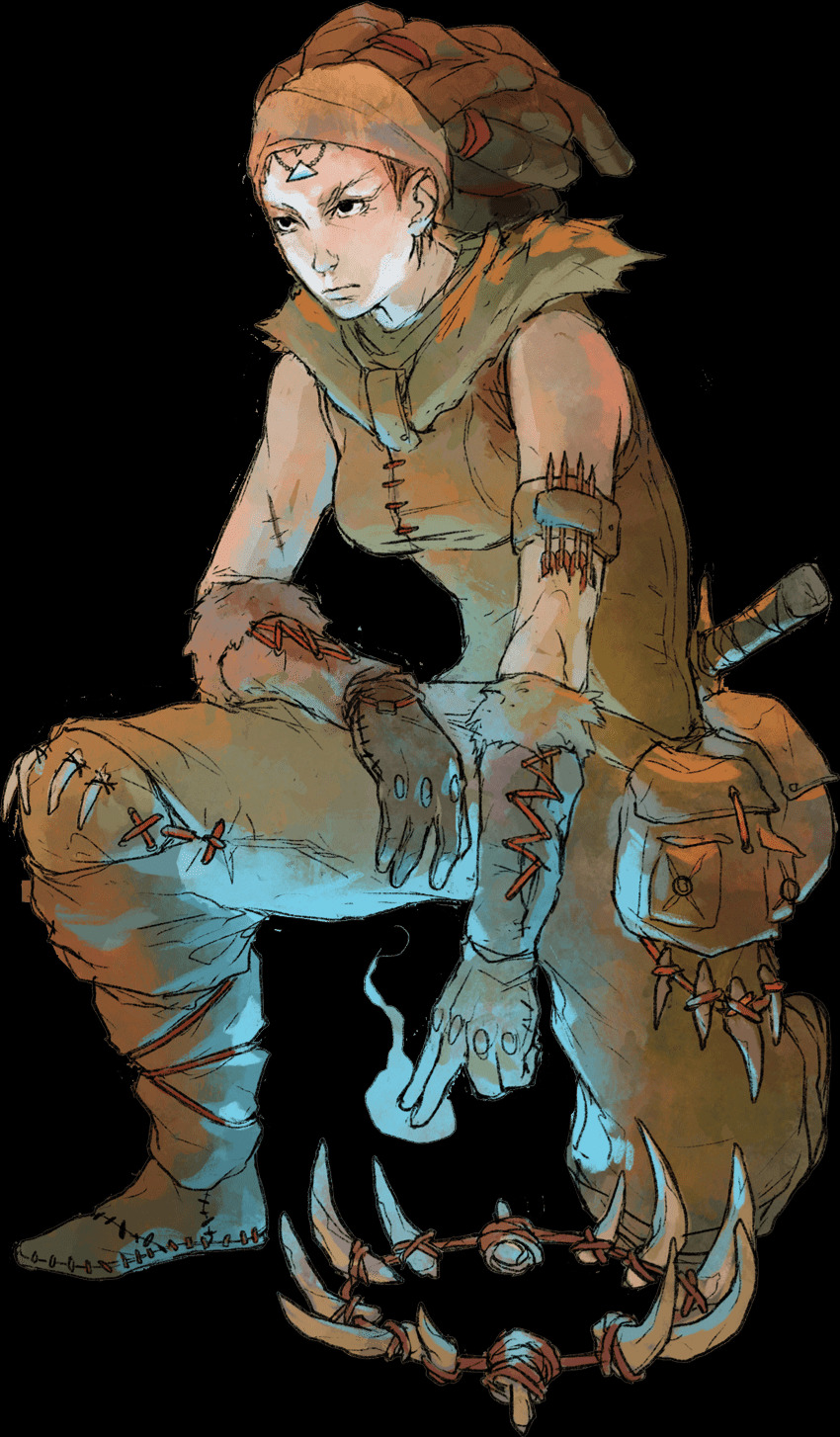
Heliana’s Guide to Monster Hunting: Part 2 – This Time There’s More
Speaking of homebrew, Heliana’s Guide to Monster Hunting is a third party title. You might want to check with your GM before you excitedly roll up a character using these rules. But ideally it’s easy and chill to talk to your GM about the kinds of characters you want to play, just as it’s easy for the GM to talk to you about the kinds of stories they want to tell for those characters.
Regardless, there’s a ton of new stuff in the book. I think there are two big sections. The new player-facing stuff, which includes a bunch of new subclasses and species, each one aimed at satisfying a different niche. And then there’s the new boss monsters and the legendary gear you can craft from them. So let’s take a look at each section, starting with the players.
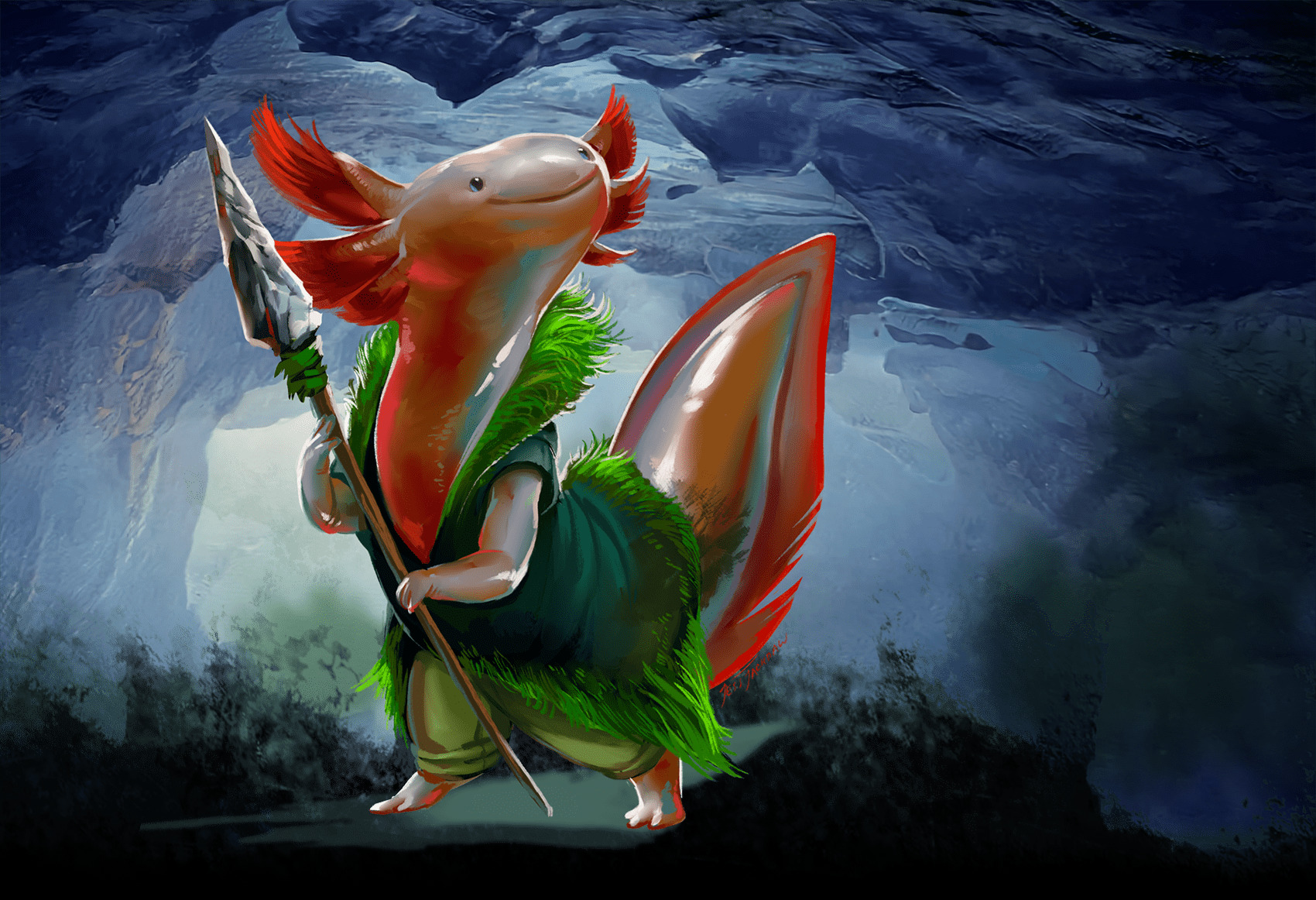
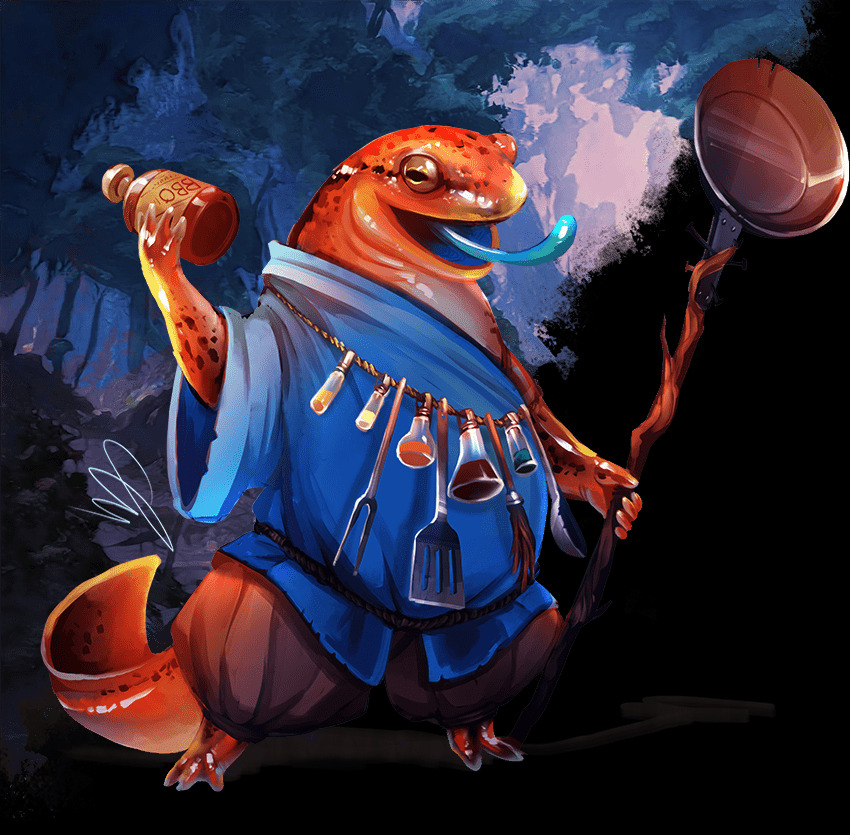
Players get access to five new species, right out of the gate, and boy, does Heliana’s know its audience. Right out of the gate, there are the Lotols, who are humanoid axolotls. Just looking at the art, you can already tell exactly who in your group is going to be eager about playing them. Hilariously, they have advantage on Wisdom saves for being Oblivious, among other things.
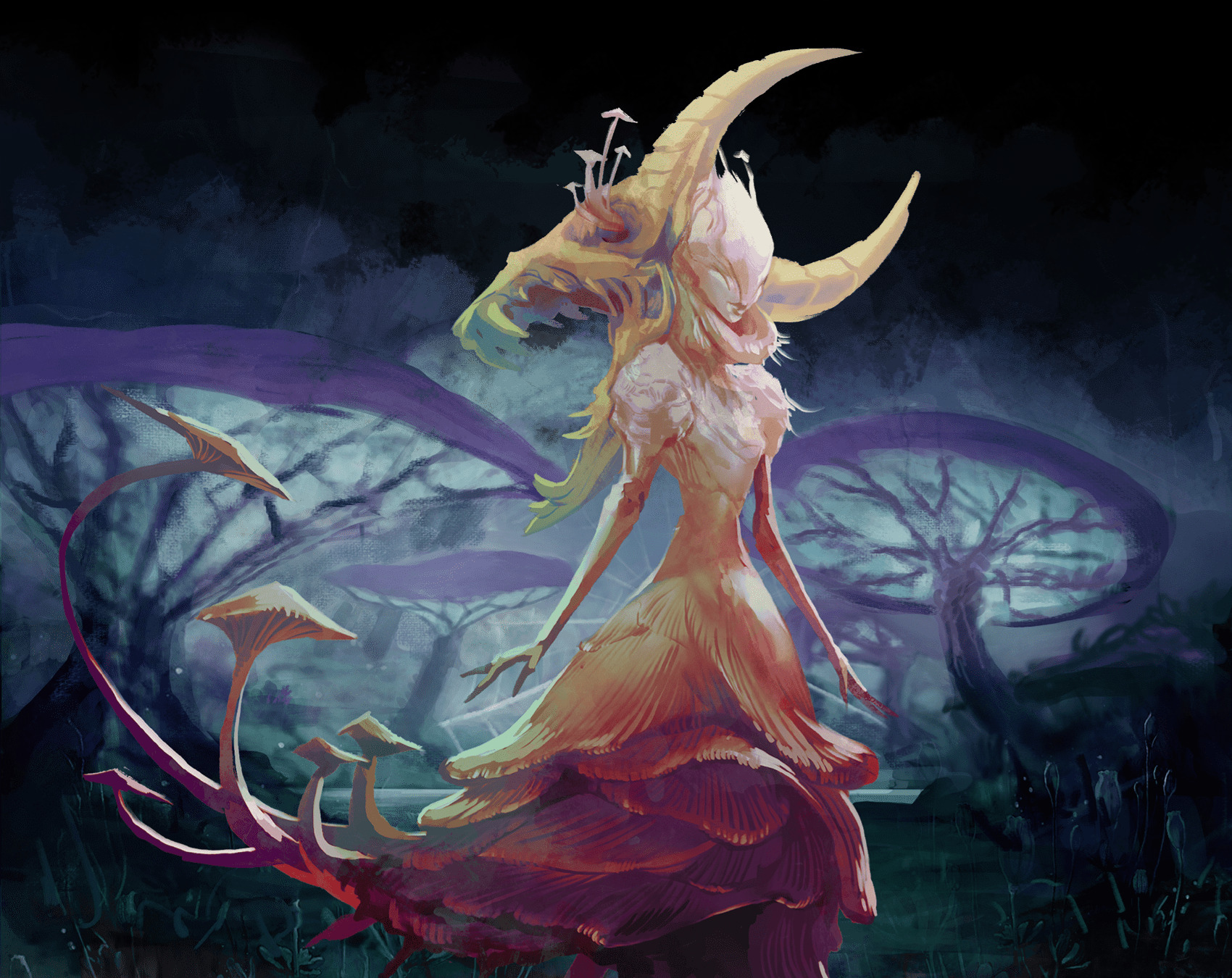
Then there’s the fungal Mycelians. These are mushroom people who reanimate the bodies of the recently deceased. So you play as a fungal colony inhabiting a dead body like a kind of spore-filled hermit crab. You make a Mycelian by pulling together traits like Darkvision or Resistance to a Damage Type from a couple of different species, reflecting adaptations the colony that is ‘you’ has picked up over the years.
The shadowy Ombrask are basically people who were trapped in the Shadowfell long enough to become transformed by its dark energies, giving them shadow powers and the inability to feel. Just like in Evanescence’s Bring Me To Life.
The Oozekin are much simpler. These are slime people that were created in a biomantic accident that resulted in experimental oozes gaining sentience. Now, they seek out adventure as a way to learn more about the world. Playing one lets you sometimes become a Gelatinous Cube and Engulf creatures and the less we scratch the surface of whatever psychosexual desire that satisfies, the better.
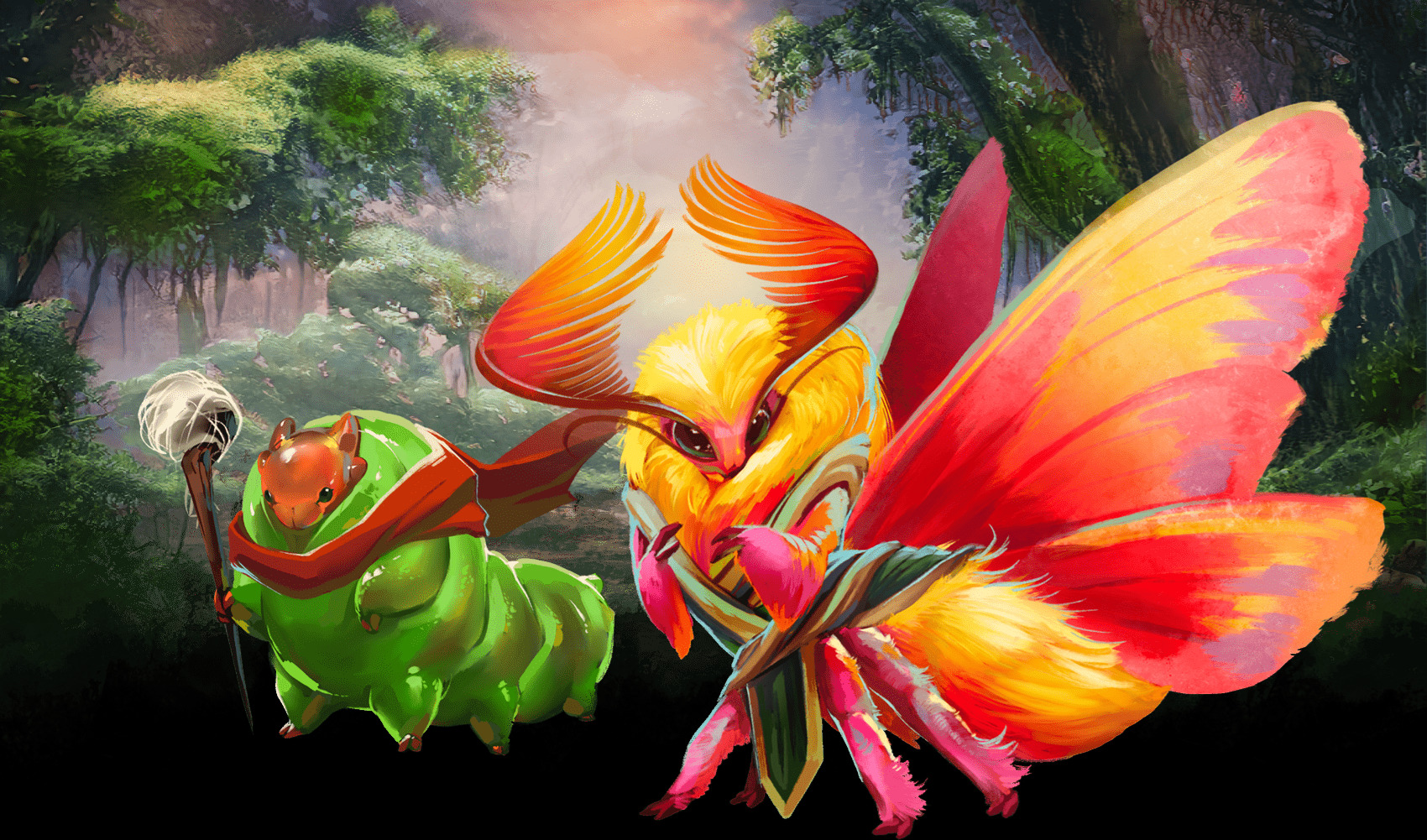
Finally, the Opterans are moth people. Sort of. They’re also caterpillar people. You exist first in a Larval Form in which you can live for, theoretically an indefinite amount of time. Larval Opterans can deploy a sticky webbing to ensnare enemies, and are hard to knock prone. But if you ever reach 5th level, you can choose to undergo a Metamorphosis becoming a Winged Opteran and then you have just 2-3 years to live, lay a clutch of new larva, and die.
New Subclasses Too – Unlock The Power Of Biomancy
Heliana’s Guide to Monster Hunting: Part 2 is also full of a ton of new subclasses. Starting with the Bard College of Cuisine for all you Palico freaks out there. This subclass is all about cooking up food that could be delicious in a dungeon. Their whole deal is making a meal that gives magical benefits (just like in Monster Hunter) and as you level up, so do the meals you can make, including delicious treats that let your friends attack or move when eating one of them in combat.
Hunt Domain Clerics, on the other hand, are all about fighting big monsters and slaying them. They believe that the chase is everything, and as such become adept at finding prey. Mechanically speaking, this means that you get to be like a Ranger, but also you’re a Cleric so you’re also much better than a Ranger. Case in point, you can deploy a feature rather like Hunter’s Mark but it has no limits on how often you can use it and you don’t have to maintain Concentration to keep it up.
Rangers, on the other hand, get to use traps. The Trapper Ranger out of Heliana’s Guide to Monster Hunting: Part 2 is all about creating magical traps, just like you’d find in Monster Hunter games. You can “trap” your weapon or 20 pieces of ammunition (and I wonder why you’d do that to ammunition when you could just trap the bow), and you can make traps that range from a simple bear trap to a localized gravity well.
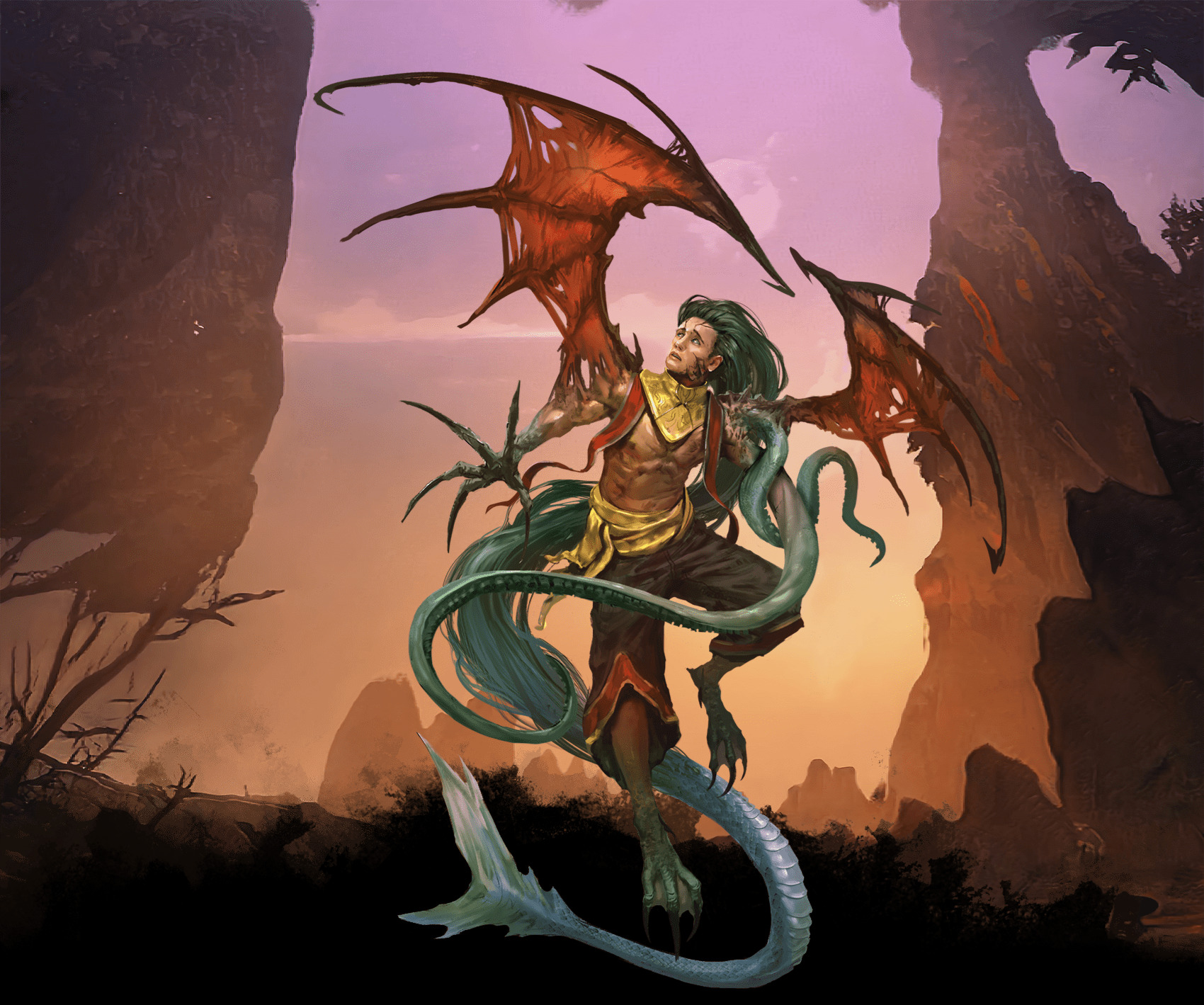
Skinshifter Sorcerers, on the other hand, are all about warping and taking on different shapes. They play a lot like a Wild Magic Sorcerer, except whenever you cast a spell, it’s not that a random magical effect might happen, it’s that your body might gain a new mutation. Or you can spend sorcery points to do it on purpose.
Finally, the Parasite Warlock lets you live out your dreams of being Venom or Carnage. Your patron is a being that lives inside of you and it can manifest through your body, giving you claws, teeth, slithering tongues, even extra attacks. As you gain in levels, you gain even more body horror abilities, like being able to liquefy yourself or gaining the ability to birth a parasite onto the battlefield to fight as an ally alongside you.
Find Heliana’s Guide to Monster Hunting: Part 2 on D&D Beyond!
Don’t Miss:

Read more at this site