

In the last couple of decades, the trend of narrative games has introduced a number of cool, useful mechanics that allow new flexibility for GMs and players. But they’re not “D&D” ideas.
Luckily, a great strength of D&D (and the Tales of the Valiant RPG) is that it’s flexible enough to bend into all kinds of shapes without breaking.
One easily stealable idea to bring into D&D is clocks.
Clocks
Versions of this mechanic have been around for a long time, but when Blades in the Dark centered on it, it hit like a lightning bolt. Even giving it a name like “clocks” almost overcomplicates it. Clocks don’t have to do with measuring time. Instead, a clock is a countdown until something happens.
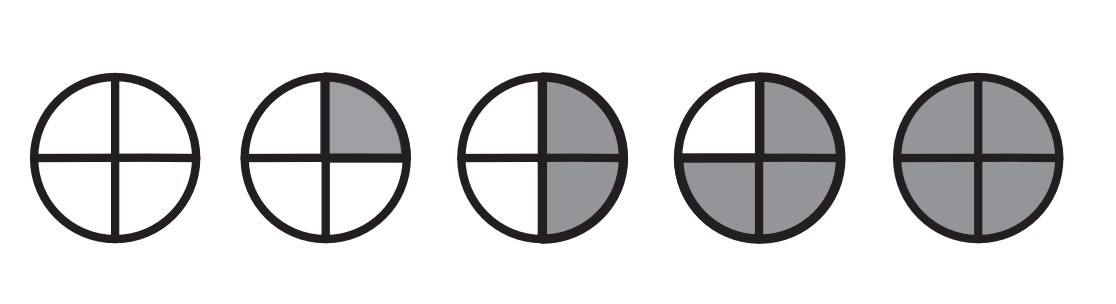
A clock is often depicted as a circle with lines bisecting it. When game events “tick” toward the clock’s end, you color in one segment. When all the segments are full, time’s up and something significant happens within the game.
Some GMs use a million clocks to track everything, and even use clocks to track bigger clocks, but that gets complicated fast. You don’t need to start there. Starting with one clock is plenty.
When to Start a Clock
There are many uses for clocks, but the easiest way to introduce them to your GMing is when some minor thing starts brewing in the background of a campaign.
When something in the game happens that won’t resolve in the next few minutes—say, the PCs anger an NPC who wants slow-burn revenge, or a volcano is going to blow eventually—create a clock, decide on a number of ticks, and give it a name.
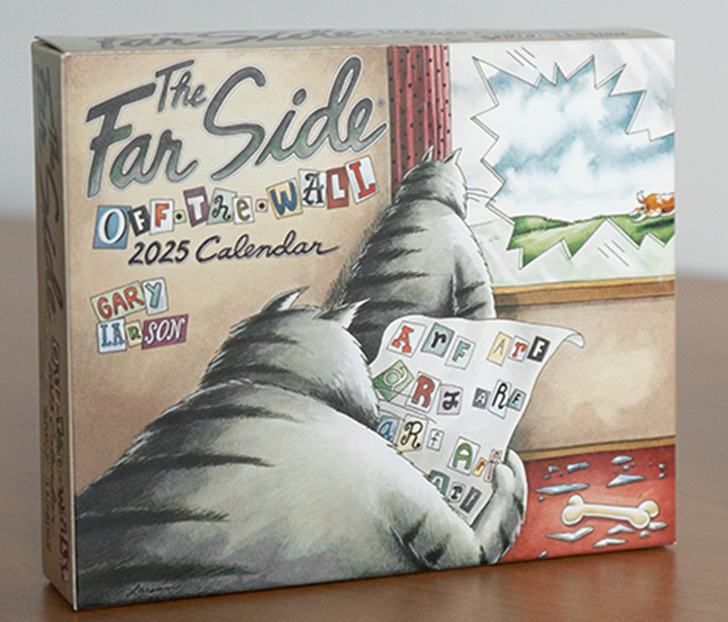
To record them, I draw on the backs of expired daily pages from my 2025 The Far Side Off-the-Wall calendar. I have hundreds of these things, and reusing them for disposable game record keeping beats just tossing them.
In the event that you don’t have page-a-day calendar slips cluttering your desk, you can use index cards, or a task list app on your phone, or a 6-sided die, or literally ANYTHING that lets you track a small number of distinct states.
You can start as many clocks as you like, but I advise keeping it to about half a dozen. If you use more than that, players tend to forget about some of them, and then they’re not carrying tension. You do sometimes get the joy of having a player do a forehead slap when something they forgot about shows up again. But mostly, you want players aware of them.
How Many Ticks on the Clock?
Clocks can have a variable number of ticks on them. The number of ticks you put on a clock depends on how long you want it to ride until it resolves or ceases to be relevant. There’s no set number, because there’s no set amount of time that things take. Generally, longer countdowns are more impactful when they arrive. For guidelines and examples, see the Countdown to Mayhem table.
Countdown to Mayhem
| Ticks | Payoff | Example |
| 4 | This session or next session | A guard notices the PCs sneaking around the castle, wolves attack in the forest. |
| 6 | The next couple of sessions | An assassin tracks down the party, the tax collector wants her lady’s cut of treasure. |
| 8 | Sometime soonish | The general recruits enough soldiers to go to war, the ill warlock finally dies. |
| 12 | Later in the campaign, but probably during this tier of play | The dragon wakes up, the royal coffers are depleted. |
Putting more than 12 ticks on a clock is doable, but it tends to reduce the useful tension. The players see the clock at 20 ticks, and then at 17, and then 13, and then . . . is that thing still around?
If an event needs more than 12 ticks, you’re better off breaking it into two smaller clocks or just not starting a clock for it yet.
Naming Clocks
Giving clocks a good name helps you remember why your started it and gives players a sense of the stakes. Best practices involves naming it something that relates to the action that occurs when it’s over. Doppelgangers Strike is great, because it tells everyone what happens when that clock ends. Something vaguer like, Shadows Resolve into Substance sounds cool and feels mysterious, but what does that mean? You might know, but your players have no idea.
Keep Them in the Open
Normally, keep clocks in the open where players can see them, even if the result of the clock is a secret. Do this because a clock serves two purposes:
1) It helps you keep track of things going on that don’t resolve quickly, and
2) it alerts players that something is going on outside their characters’ line of sight. This creates tension in a fun, interesting way.
Some GMs keep secret clocks for their own tracking, but a clock that players can’t see is only doing half the work. One job of clocks is to give players something to notice, consider, and perhaps dread. They should see when their characters’ actions move a clock . . . or when a clock moves seemingly without them.
When to Tick a Clock
The best time to tick a clock is in response to something players do. A simple trigger is when a PC fails a check. Ideally, that failure is directly related to the outcome. For instance, when the PCs are skulking around a cult complex in costume, they need to make CHA (Deception) checks to avoid calling attention to themselves. When they fail their fourth CHA (Deception) check, someone spots them and raises the alarm.
However, ticks can also be more abstract. Did a PC fail an INT (Religion) check? Then the bishop of the party cleric’s church ticks toward giving into a devil’s temptation.
Another reason to tick a clock is in reaction to choices the party makes. If they pick one faction over another, the clock of Concordans March Without You ticks toward its end.
Finally, you might tick a clock for your own secret reasons. That’s fun occasionally too.
Expired Clocks
Sometimes a clock doesn’t end before it’s irrelevant. In the previous example, maybe the PCs find the cult leader at the center of the compound after they fail only three CHA (Deception) checks.. They never get caught! That’s fine. The clock did its work, even if the alarm never went off, and the players get to experience a win outside of a big fight.
Time’s Up
When a clock does end, the game situation needs to change noticeably, and the longer the clock, the bigger the change. A clock shouldn’t just end with the duchess deciding to move some money around where the PCs can’t see. That could be consequential, but it doesn’t provide a clear payoff.
Instead, the result of the duchess moving money around needs to happen. A new palace begins construction, stone masons are now in demand, and a whole clan of dwarves has moved to town. On the fiip side, the baker’s guild is no longer funded and that place the PCs like to get bread is going out of business. Something that PCs can see and affects their lives needs to happen at the end of a clock.
Have you used clocks in your 5E game? Let us know in the comments or over on our official Kobold Press Discord server!
Over on Backerkit, companies from across the publishing spectrum have banded together to produce megadungeons! Kobold Press has joined the call and produced our own megadungeons from levels 1 to 12, HASTENING DOOM.
Based on the dungeon blog entries from our D23 community experiment, Hastening Doom covers six big levels of dungeon crawling glory. Fight weird monsters, avoid gruesome traps, and solve creepy puzzles. And pack some extra rations, because your characters go to Sooledad the Mirror Hell, there’s no town to take a long rest.
Read more at this site