

North Carolina imprint Tavern Publishing has cleared its initial funding goal on Kickstarter for One Night Adventures, introducing three self-contained adventure modules tailored for fifth edition play. Reaching its target within days of going live, the debut campaign from founders Davey Beauchamp, Dustin Cash, and Micah Cash addresses the persistent strain of preparation time for Game Masters running three- to five-hour sessions.
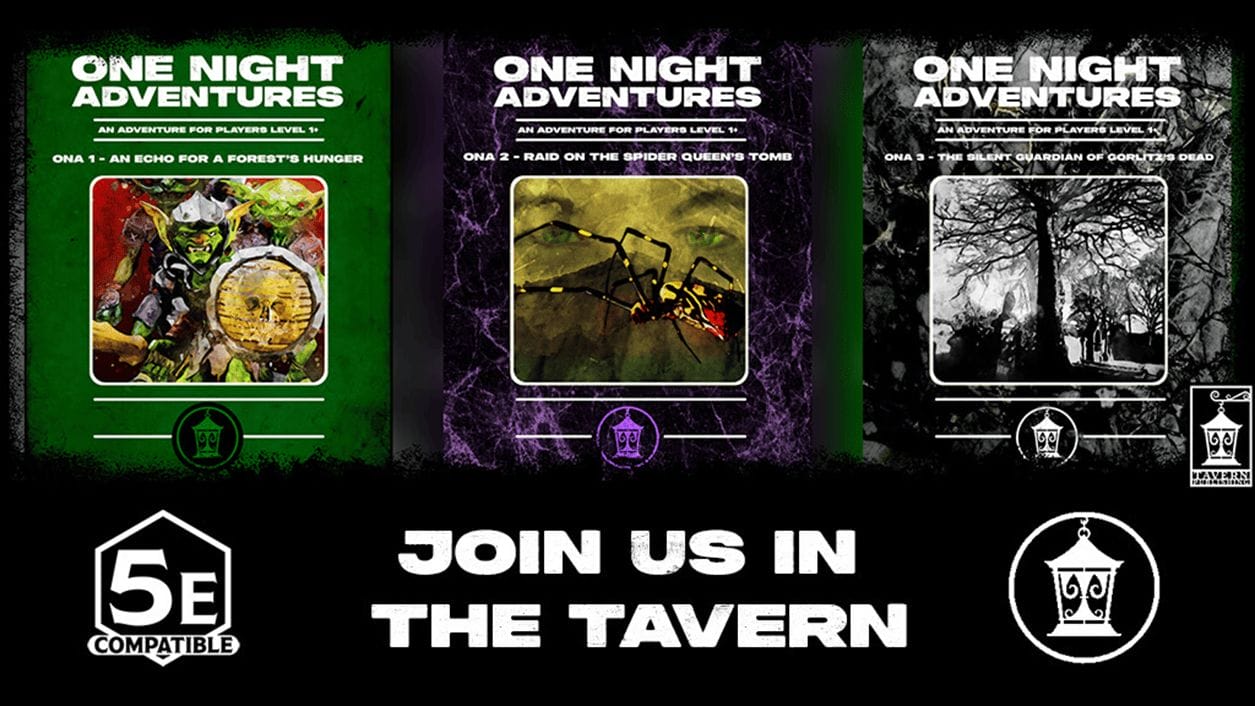
Written explicitly for the revised 2024 rules framework using SRD 5.2.1, the series provides complete standalone scenarios equipped with isolated stat blocks, printable encounter maps, and dedicated virtual tabletop tokens. Each 40-page book is designed to avoid cross-referencing external sourcebooks at the table, offering accessible one-shots for convention organisers, novice tables, and ongoing campaigns that need immediate side quests.
Speaking exclusively to Geek Native, Tavern Publishing unpacked the mechanical balance, artistic philosophy, and market strategy driving their debut roleplaying game release.
Deconstructing the 40-Page One-Shot
A common frustration among Game Masters is the bloated one-shot: modules billed as single-evening runs that secretly require hours of preparatory reading and severe railroading to finish on time. Tavern Publishing tackled this dilemma by ensuring that the 40-page count serves as a self-contained toolkit rather than a linear script.
Each adventure includes art, maps, and stat blocks, so those 40 pages are inclusive of the entire experience. We believe that a module should have everything a GM needs to run it successfully without being required to search for external resources. It comes back to providing value: we want to ensure that each adventure both exceeds expectations and can provide a meaningful experience.”
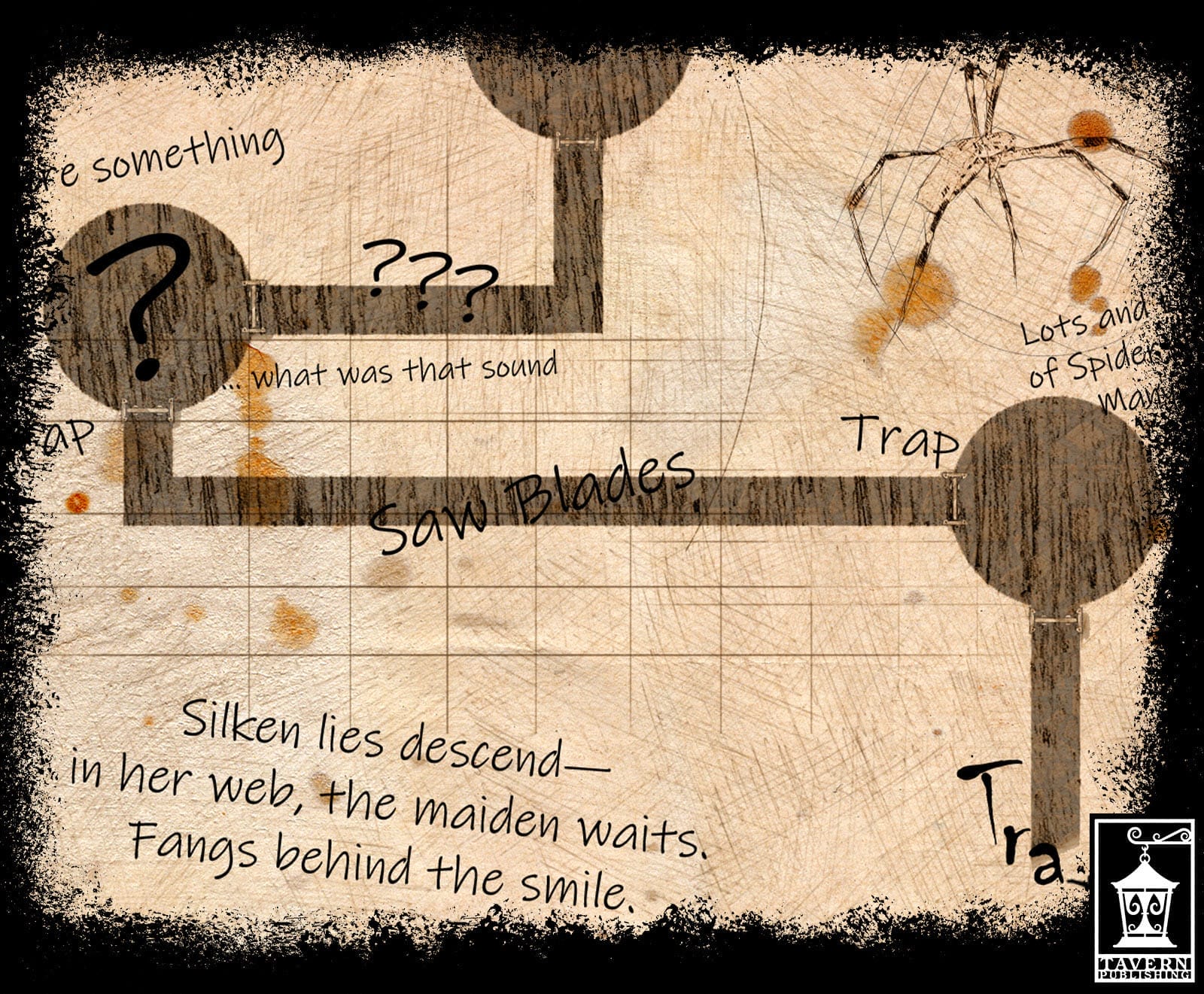
The studio balances modular pacing by packing the margins with optional world-building that GMs can draw upon or discard at will:
For instance, in The Silent Guardian of Görlitz’s Dead, the adventure includes 18 different plot hooks along with important NPCs and places of interest in the village. None of that content is necessary if you want to jump in and begin exploring a cursed cemetery, but it can help build the scene and create tension. We want GM’s and players to have choices in these adventures, and we hope to support those choices by providing as much content as we can.”
Running the 2024 Rules at the Table
With the recent launch of the revised 2024 core rulebooks shaking up the fifth edition landscape, indie designers face a split player base. Tavern Publishing opted to build directly on SRD 5.2.1, anticipating that newcomers will gravitate towards the latest rules, while offering direct advice for legacy 2014 tables:
We anticipate that newer players will most likely be using the 2024 (5.5e) rules as a default, so it made sense to write it for that audience; however, the encounters are designed to handle both versions. If an encounter feels too difficult for a 1st Level party, then we suggest either modifying the creatures’ stats or lowering the number in the encounter. To be truthful, we at Tavern aren’t necessarily ‘rules’ people. We run our games in ways that support role playing and character development with a loose utilization of rules. However, we recognize that many people follow rules closely, which is why we chose the most recent rule set instead of 2014 5e or being fully system-neutral.”
The “Human Made” Imperative
Tabletop roleplaying games face an ongoing reckoning over generative software, with community scrutiny falling heavily on commercial art assets. Tavern Publishing takes an uncompromising stance, committing to exclusively human writing and illustration. Lead artist Davey Beauchamp, a former librarian with credits on Doctor Who publications for the BBC, BBCA, and Penguin UK, highlighted the stark reality facing working illustrators at live events:
We are very much against AI generated content, and we’re carefully trying to build a business model and scale our production to ensure that we can commission artists and writers. Davey, one of Tavern Publishing’s founders, is routinely at conventions showcasing and selling his art, and he would never have thought that he’d have to put a sign on his booth that says ‘Human Made.’ All three of us at Tavern are creative in our own ways, and we’re all currently writing and designing products for the company. That creative process is what got us into this, so we will never let that be eroded to save money or time.”
The campaign also features guest artist Ryan Miller for an exclusive omnibus cover stretch goal, keeping commercial commissions firmly in human hands.
Chaining Standalone Adventures
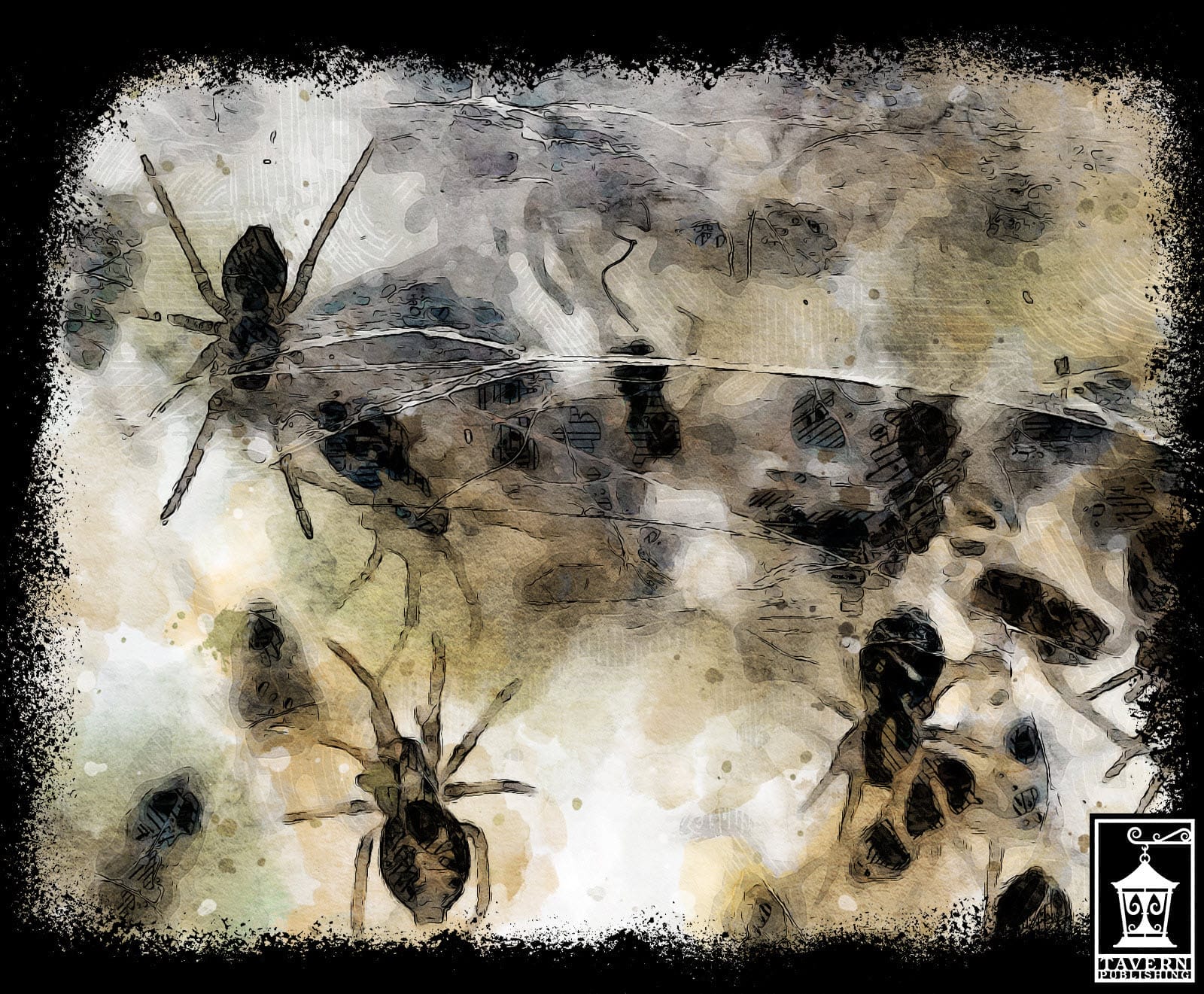
The project bundles three distinct thematic scenarios: the wilderness ambush of An Echo for a Forest’s Hunger, the high-tension cavern expedition of Raid on the Spider Queen’s Tomb, and the rural mystery of The Silent Guardian of Görlitz’s Dead. While designed to run in isolation, the studio revealed that the modules share an underlying setting and can be linked into a continuous low-level arc:
Davey had this in mind as he wrote the adventures. He sees them happening in the same world, but we chose to make the story, plot hooks, and continuing threads open to fit the players’ stories. We love a good side quest, and usually are throwing in adventures just like these into our own campaigns to do something a bit different or provide a palette cleanser. If a GM wants to stack these as three early campaign adventures, Davey suggests this order: An Echo for a Forest’s Hunger, The Silent Guardian of Görlitz’s Dead, then Raid on the Spider Queen’s Tomb, but, honestly, they can be played in any order as it comes down to how the GM wants to thread them together.”
Why One-Shots Beat Setting Tomes
Launching a new imprint with targeted single-session scenarios runs counter to the prevailing industry trend of debut crowdfunding campaigns offering massive 300-page campaign settings. Tavern Publishing intentionally avoided encyclopedic world books to focus on table accessibility:
There are so many setting books out there and many of them are not designed for first time or fairly new players. We wanted to create an entry point for a longer campaign or an easy one night session. And we’ve been there. That first time running a game or a new campaign can be daunting, so we wanted something quick, easy, and fun with the flexibility to use them anywhere or however a GM wants. In the end, we’re here to help people tell their stories. And don’t worry, we do have a few setting books in the works! All three of us love creating worlds and we’re each working on future products that are different from One Night Adventures. But we felt that short, memorable adventures are fun, we use them in our own campaigns, and that it would be a good way to introduce people to our company.”
Production and Delivery Safeguards
To manage the financial risks that often sink first-time crowdfunding creators, Tavern Publishing selected a split fulfilment method via DriveThruRPG. Single softcover tiers operate on a print-on-demand code basis where backers cover printing and delivery at checkout, whereas the premium $50 (approx. £38) hardcover omnibus integrates printing expenses directly into the pledge to simplify budgeting:
People play games in different ways, and we want players to read, collect, and play these modules in the way they prefer. While we routinely use digital materials in our games, there is nothing like having a real book in your hands, so we wanted to provide that option. We landed on the split model because we want a bit more time designing the hardcover to ensure quality. We felt that the $50 cost on that tier was easy to understand and allowed us the flexibility to finesse the design, size, and premium quality of the book. Paper and printing costs can be volatile, so the split model provides flexibility for the customer who wants a softcover while protecting us from having to go all-in on printing physical products. As a new publisher, we’re still a ways away from physical product sales at cons. So we want to be mindful of our budget while still having options for players and customers.”
For digital tables, backers can secure individual PDF modules for $5 (approx. £4) or pick up all three together in the digital omnibus for $12 (approx. £9). Higher-tier physical rewards include signed and remarked omnibus copies from $100 to $150 (approx. £76 to £114), containing unique original sketches by Davey Beauchamp alongside signatures from all three founders.
The campaign operates under Kickstarter’s standard all-or-nothing funding terms and will run until Saturday, 3 October 2026 at 4:59 AM BST. Digital files and print-on-demand vouchers are expected to be delivered by November 2026, followed by physical collector editions in December 2026.
Quick Links
Read more at this site