

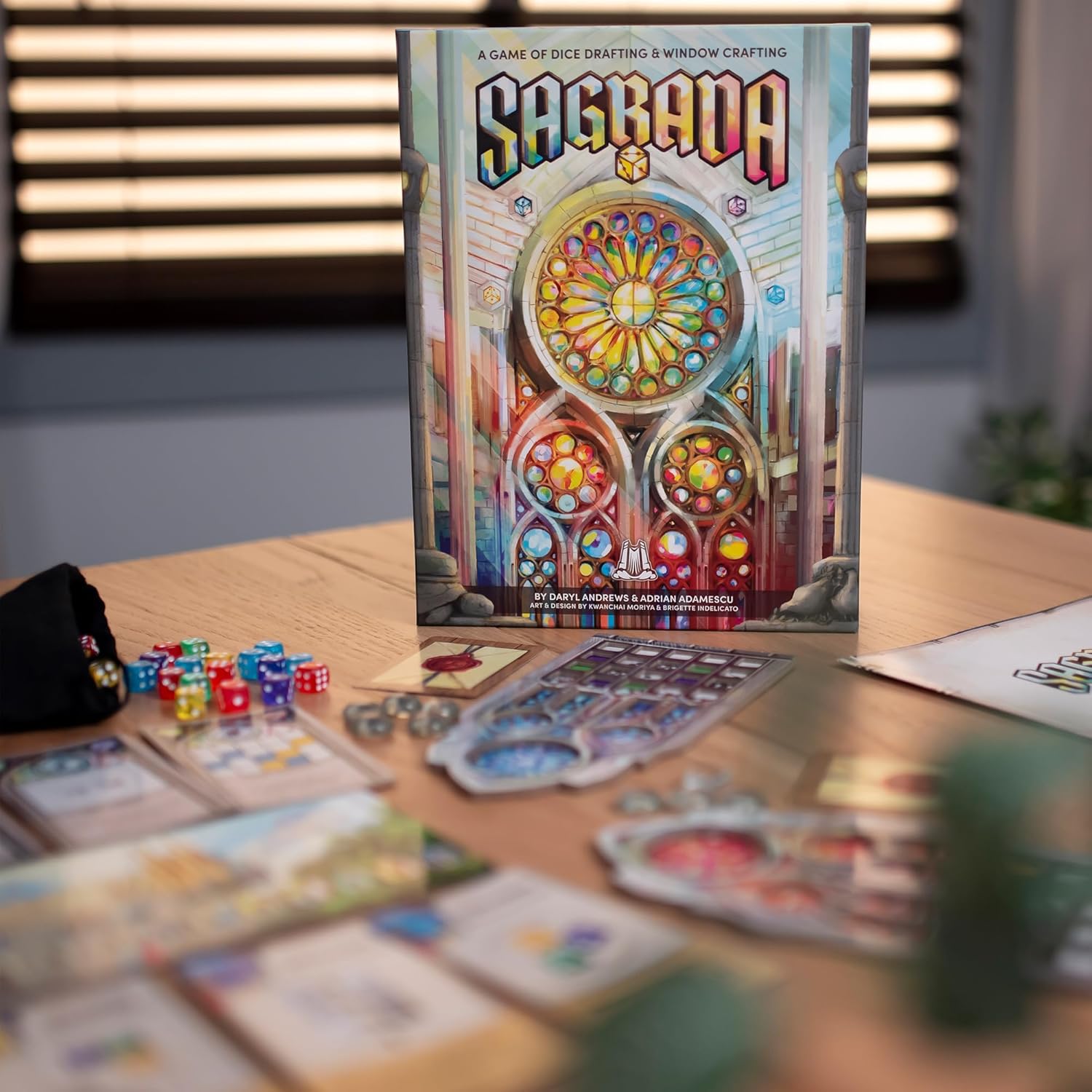
In Segrada, players become stained glass artisans and craft the most beautiful stained glass windows that colored, translucent dice can make.
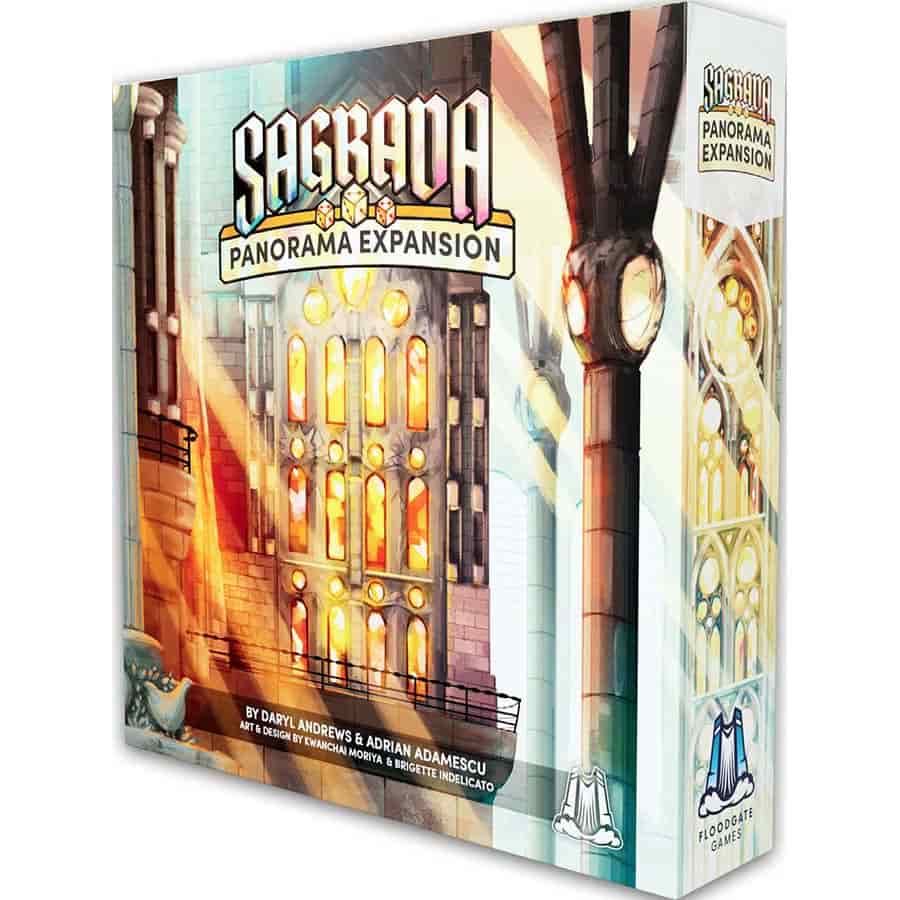
There’s a new Panorama expansion available for pre-order right now. This expansion will allow dice artisans to craft even wider and more spectacular stained glass windows. Additionally, it will allow players to extend their original game to five or six players. There will be ‘shared objectives’ where artisans will work and score points together, and ‘focal points,’ where players will have to focus on specific spaces within their window.
Not familiar with the core game? Keep reading…
Sagrada Overview
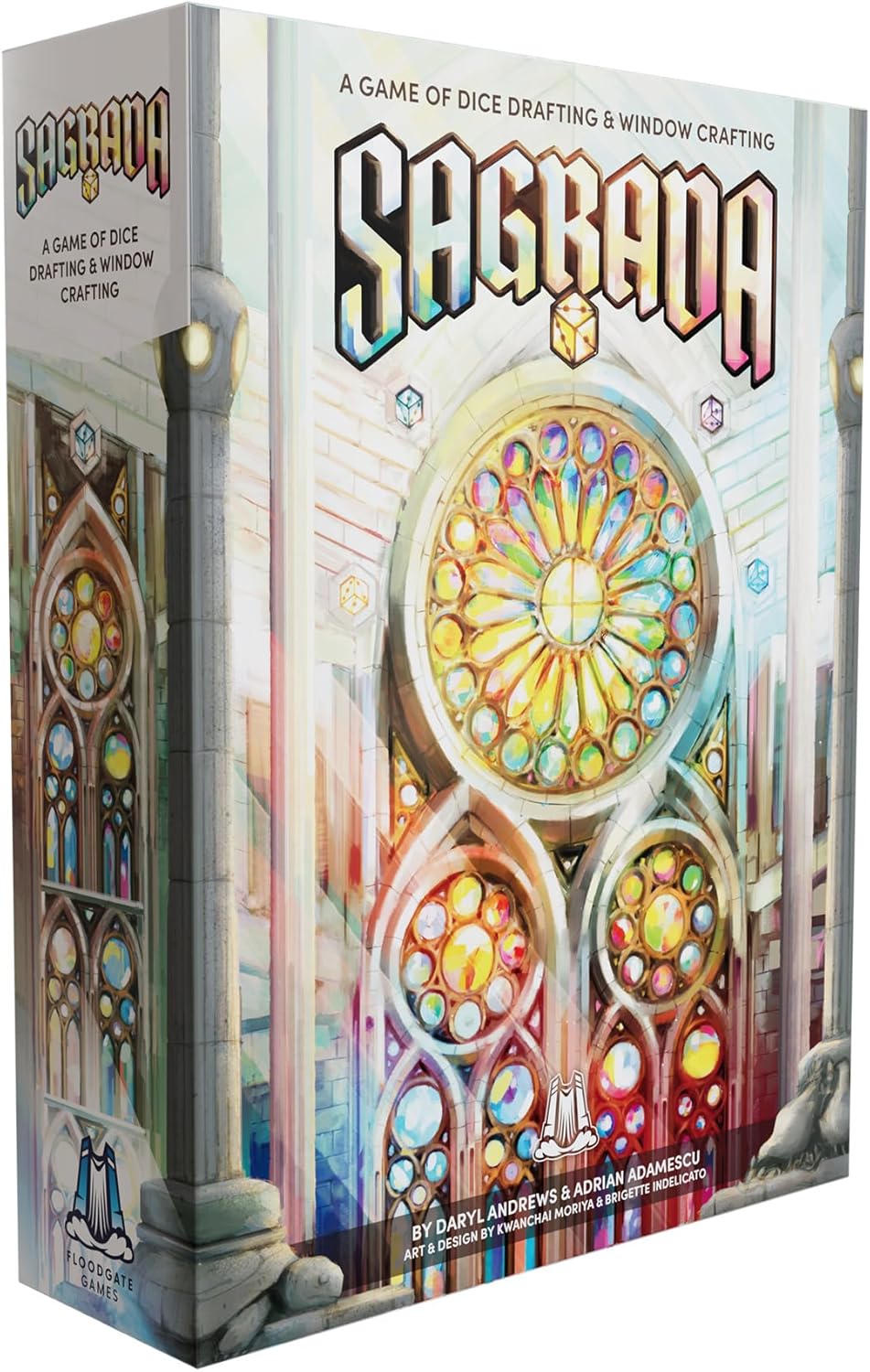
Sagrada is a game of building beautiful stained glass windows with nothing but dice. Take on the role of a skilled artisan and craft the window displays of the Sagrada Familia. And see if your masterpiece will be considered the most beautiful piece of stained glass art constructed.
| Quick Guide | ||
|---|---|---|
| Mechanics | Drafting, Grid Coverage, Pattern Building | |
| Players | 1 – 4 Players, Age 14+ | |
| Playing Time | 30 – 45 Minutes | |
| Similar Games | Fantastic Factories, Splendor, Cascadia, Azul | |
| Publisher | Floodgate Games |
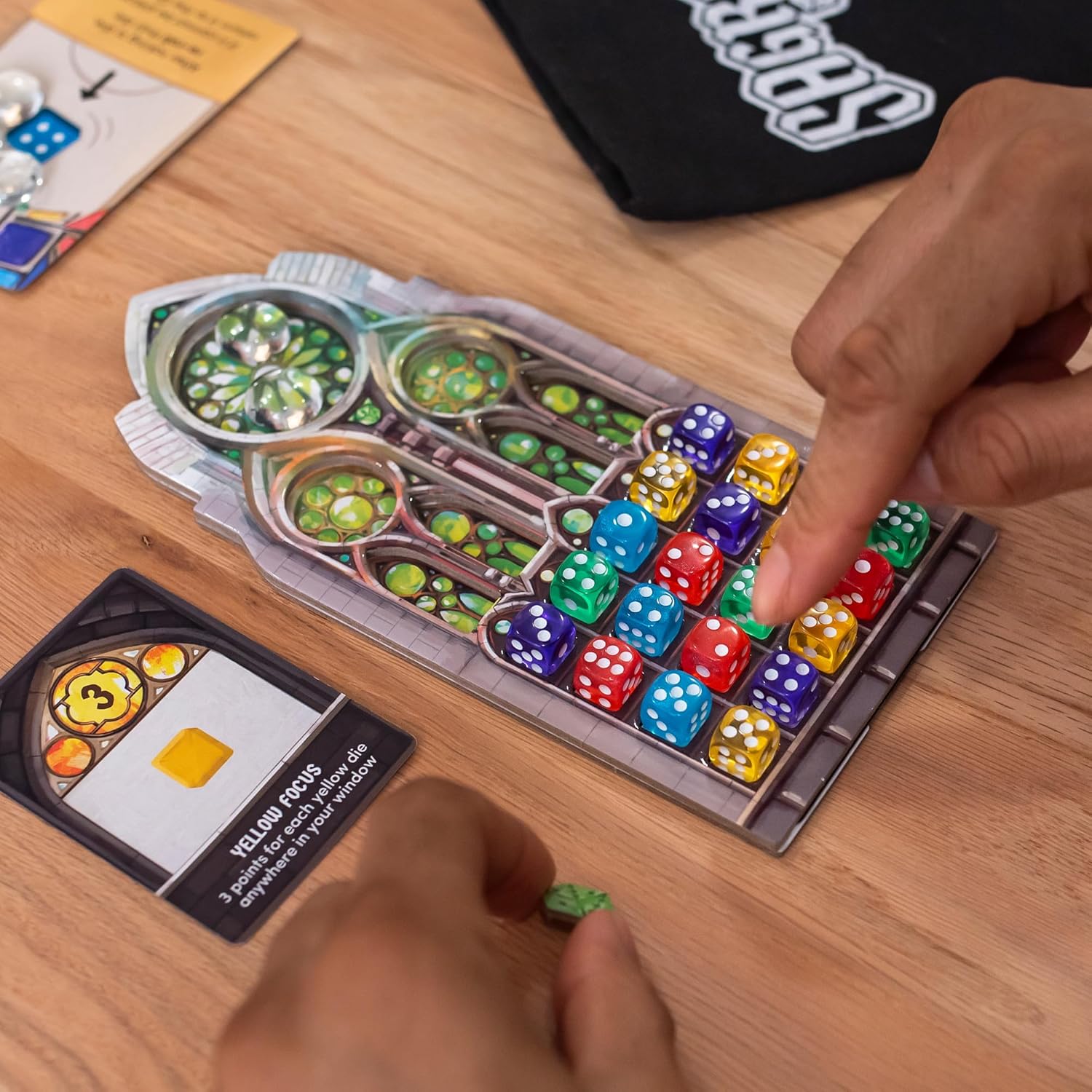
If you’ve ever arranged your dice for maximum aesthetics while waiting for the other people at your table to make a move, you’re halfway to playing Sagrada already. In this game, players craft dazzling pieces of stained glass art. And this is all done by strategically arranging translucent, colorful dice.
Of course, this is a competitive board game. So the artistic merit of your stained glass windows will be scored, and the player with the highest score wins. Plus, there is a solo mode, for any would-be artisans who want to challenge themselves to craft the best by-the-numbers window art they can.
How To Play Sagrada
In Sagrada, players build colorful windows from translucent dice over the course of ten rounds. The winner is the player who scores the points. And points are earned for achieving private as well as public goals. However, points will be deducted for spaces left blank.
Game rounds consist of the player randomly drawing and then rolling the dice. Then players will choose dice from the dice pool to place on an empty space on their stained glass window. But there are specific rules to keep in mind as dice are picked and placed.
Dice must be placed on the board on the edge or corner first, and then placed on adjacent or diagonal spaces in the following turns. Dice may also never be placed next to an identical color or value of dice. Finally, the dice must obey any restrictions in color or value as demanded by the game board.
In some instances player may be able to move, swap, or reroll one or more dice. But these moves must be paid for and should be used sparingly and strategically.
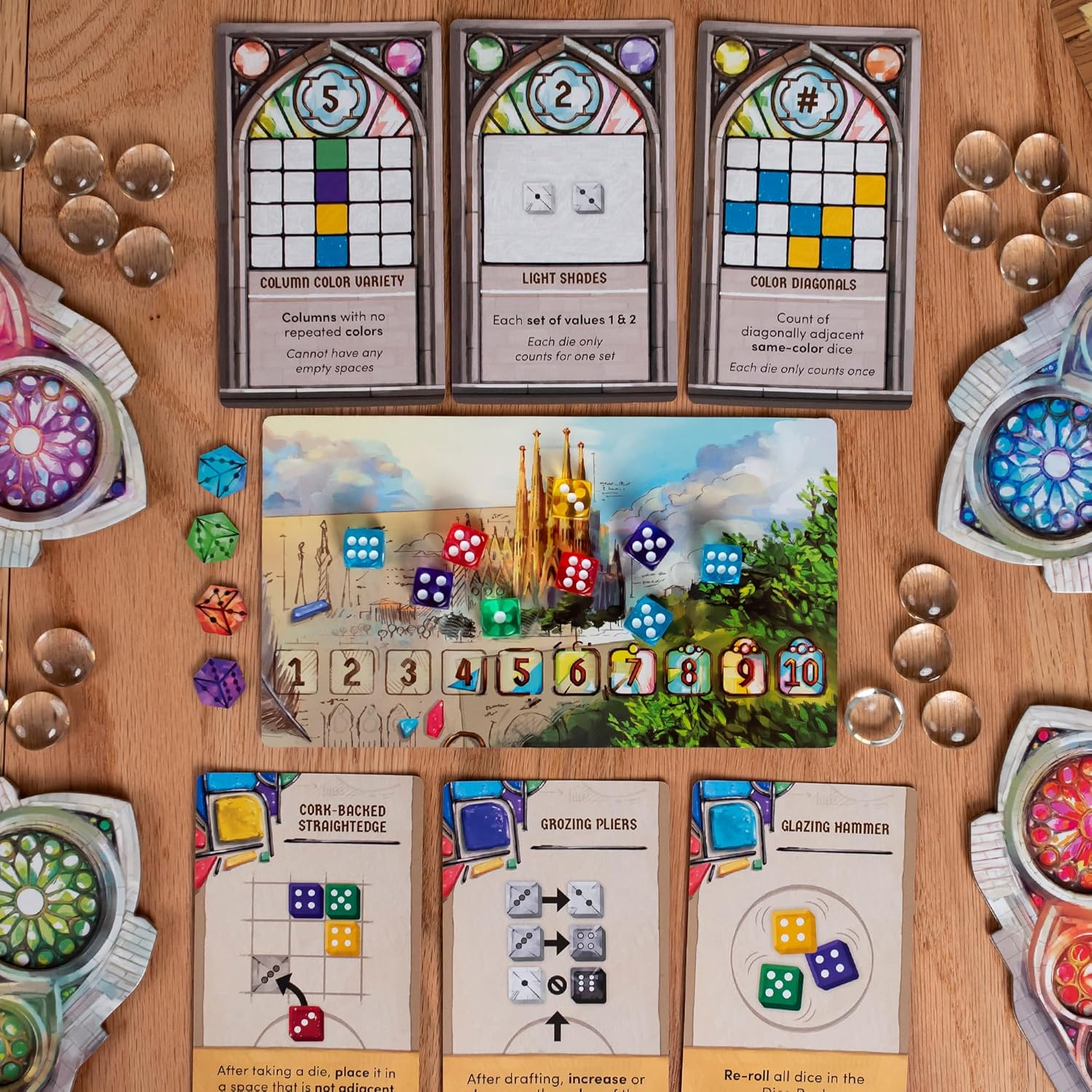
At the end of the ten rounds, players will tally up how many points they earned between their private and public goals. They will then deduct any penalties they may have from spaces left blank on their window. And the player with the most points wins.
Should I Buy This Game?
Personally, I think so. Segrada is a fun strategy game that’s easy to learn and quick to get the hang of. The hardest part isn’t mastering the rules, but trying to out-strategize the other people at your table and figuring out how and if you can manage to fill in every space on your window. With thirty-ish minute long games, it never really has the chance to drag or get boring. And every game is a little different as you work on different window board and towards different goals.
Please note that BoLS may earn a commission when you purchase through links on our site.
Don’t Miss:

Read more at this site