

Diplomacy: The Golden Blade is a game of deal-making and deal-breaking and becoming a world superpower in a pre-WWI world.
Diplomacy: The Golden Blade is a game of negotiation, political maneuvering, and well-timed backstabbing in the days leading up to World War I. The world is tense, and only the most cunning and strategic leaders will emerge victorious. But those who master the dance will show off their unmatched military and political prowess.
| Quick Guide | ||
|---|---|---|
| Mechanics | Negotiation, Prisoner’s Dilemma | |
| Players | 2 – 7 Players, Age 14+ | |
| Playing Time | 30 – 105 Minutes | |
| Similar Games | Coalitions, Intrigue, Sidereal Confluence | |
| Publisher | Renegade Game Studios |
Diplomacy: The Golden Blade Overview
Set in a pre-World War I world, Diplomacy: The Golden Blade is a stand-alone card game of politics, alliance building, and strategic betrayal. At any time, any foes can team up against you, or any friend can stab you in the back. And at no point were any players eliminated – meaning that from the start of the game until the end, anything could happen, anyone could snatch away a surprise win, and anybody could be thrown under the bus.
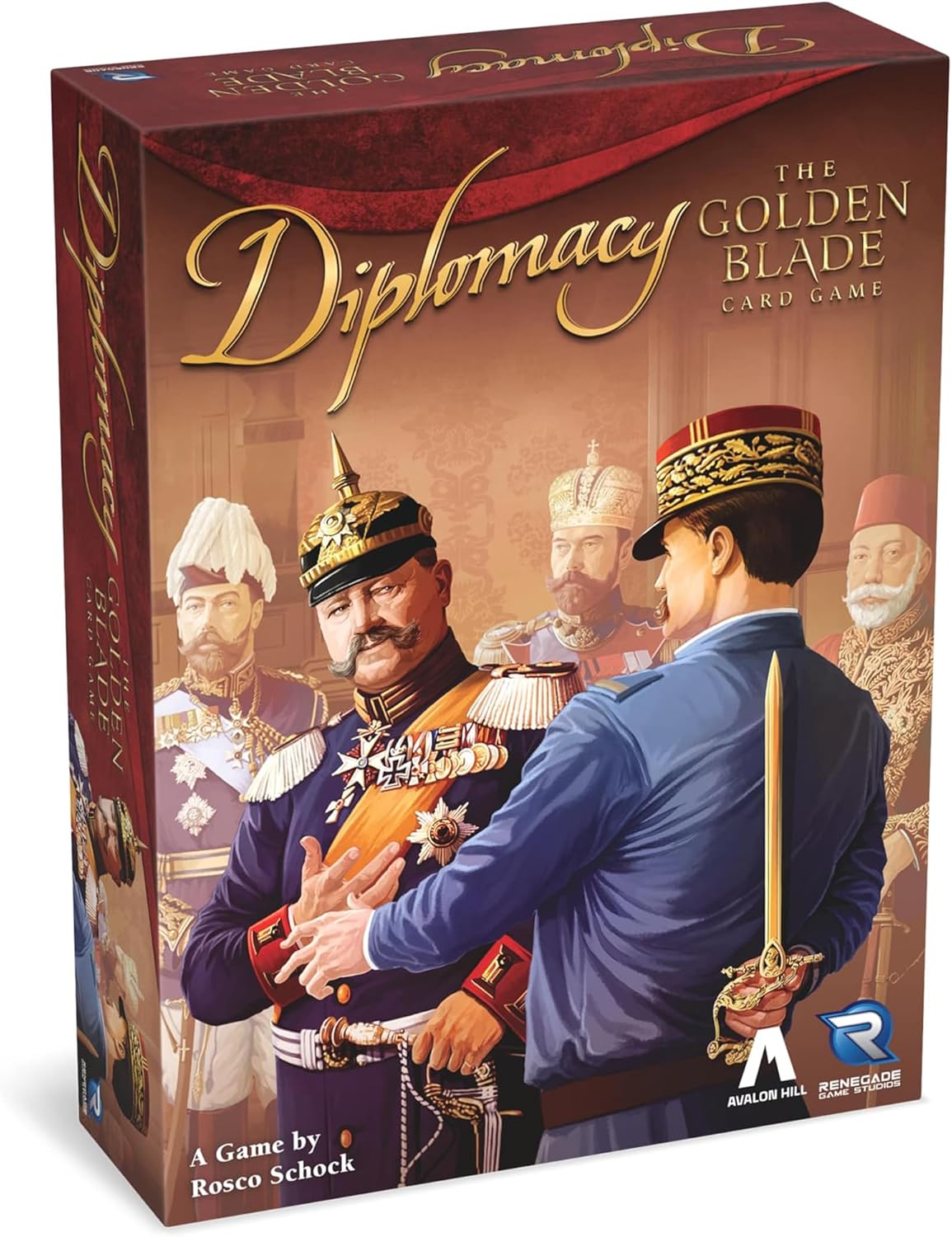
Two to seven players take on the roles of various world superpowers and begin to build their power across the military and political spectrums. Throughout the game, they will build up their levels through a mixture of deal-making, deal-breaking, and cunning. And eventually, one country will prove itself to be the most strategic and well-positioned.
How To Play Diplomacy: The Golden Blade
To set up a game, players will choose the country they would like to play as and claim all of their cards, as well as power markers, unit cards, and ambassador tokens. All players will then simultaneously perform a single ‘Build Phase’ to get set up before the game actually starts.
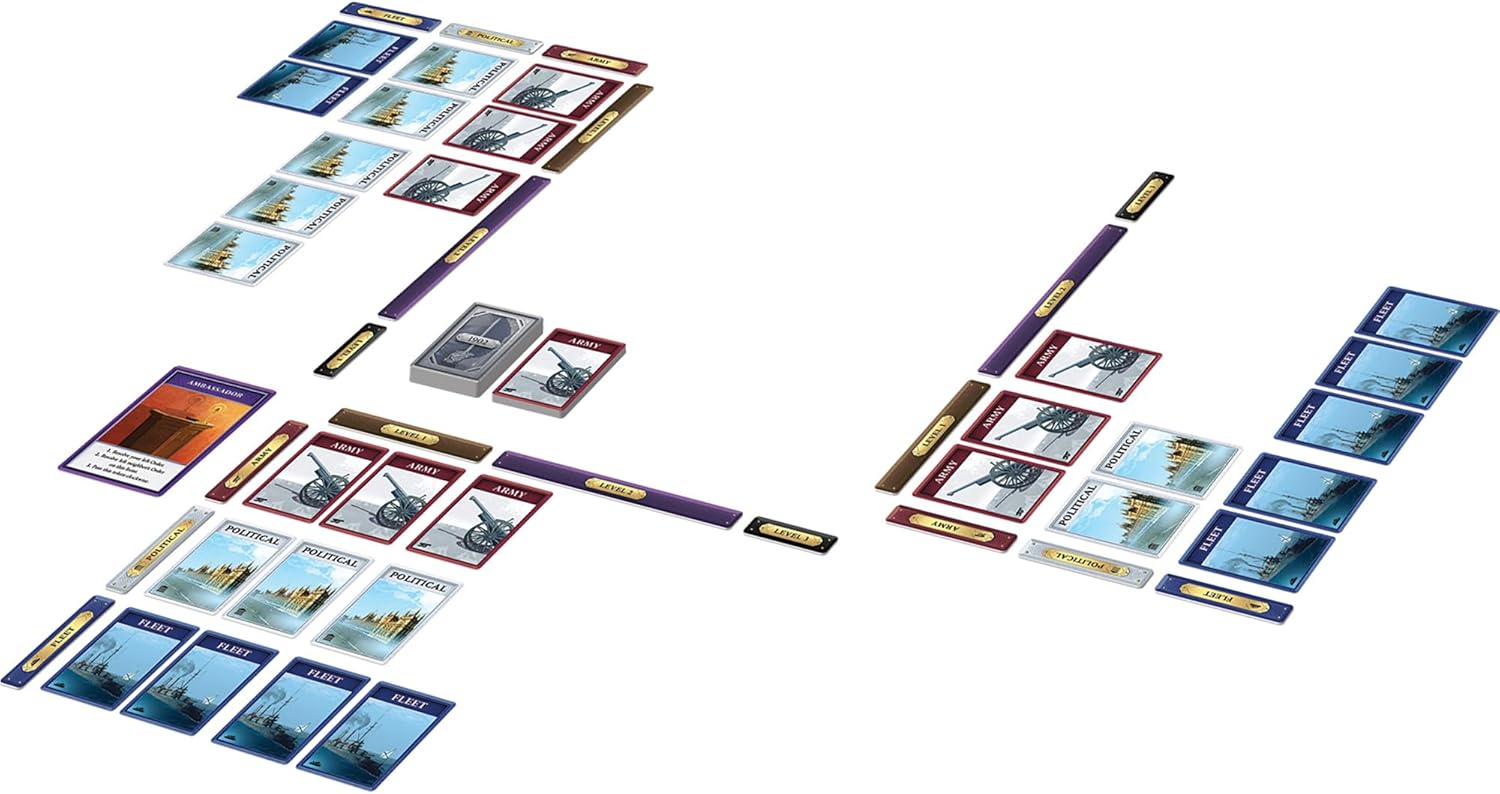
Turns of Diplomacy: The Golden Blade are broken up into four phases: supply, diplomacy and orders, order resolution, and build. In the supply phase, players will draw cards to add to their hand. Then, in the diplomacy and orders phase, they will discuss their plans for this or the upcoming turns. This is where alliances may be made or broken. Deals are discussed, schemes concocted, and negotiations are entered into.
Once diplomacy has concluded, the order resolution phase sees players flipping over their cards and laying out and executing their plans and orders. Some orders may betray a former ally or even be entirely illegal, but it’s all worth it if one of your power levels increases. Finally, in the build phase, players will secretly choose one unit card from their hand to deploy in preparation for the next turn.
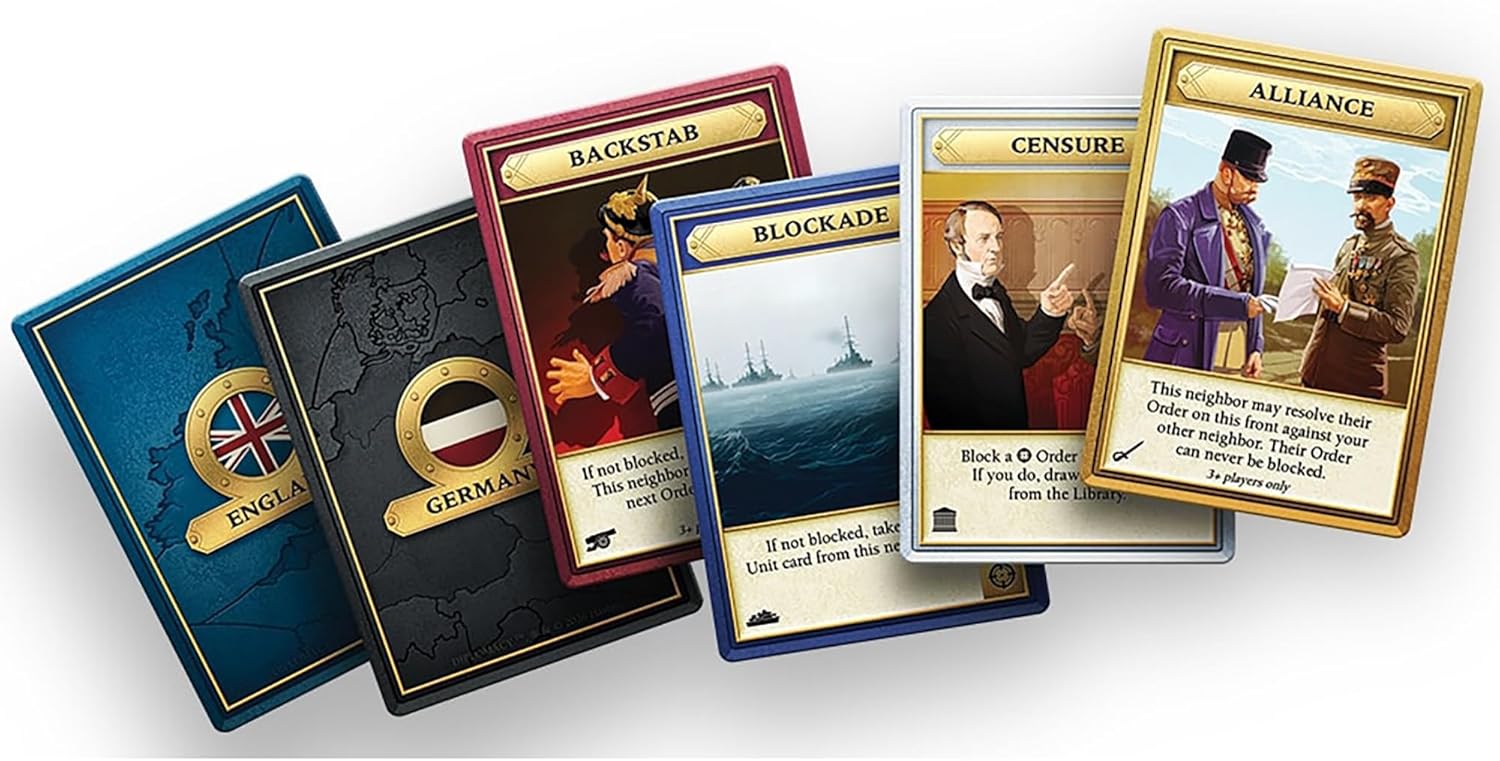
The game is over when one or more players achieve a power level of three in at least one domain – Army, Fleet, or Political. Two or more players reaching this level simultaneously will look at their second-highest and then third-highest domains to break the tie.
Should I Buy This Game?
The people who will love this game are in the center of the “war history” and “strategy game” ven diagram. If you are both of those things and you don’t already have this game pre-ordered, I’m frankly a little surprised. But what about everything else?
Personally, I love a game with a little bit of bluffing and friendly back-stabbing. And if you do too, I bet you’ll enjoy Diplomacy: The Golden Blade. But this game is also brand new – if you order it now you’ll receive it May 7th. There isn’t a large pool of reviews to compare my thoughts against or copies to test run in your local board game cafe yet. So is this a game you should buy? Maybe! But what I’ll say for sure, is this is one to definitely keep an eye out for.
Other Ways To Play
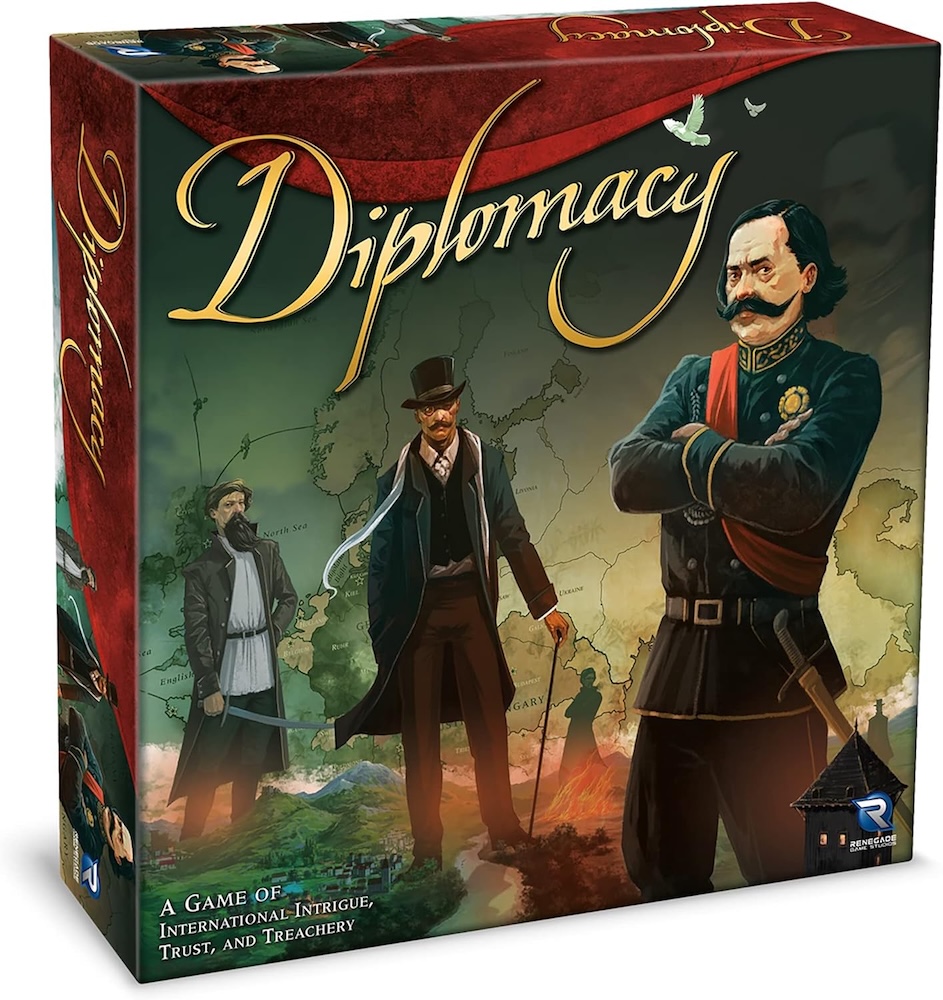
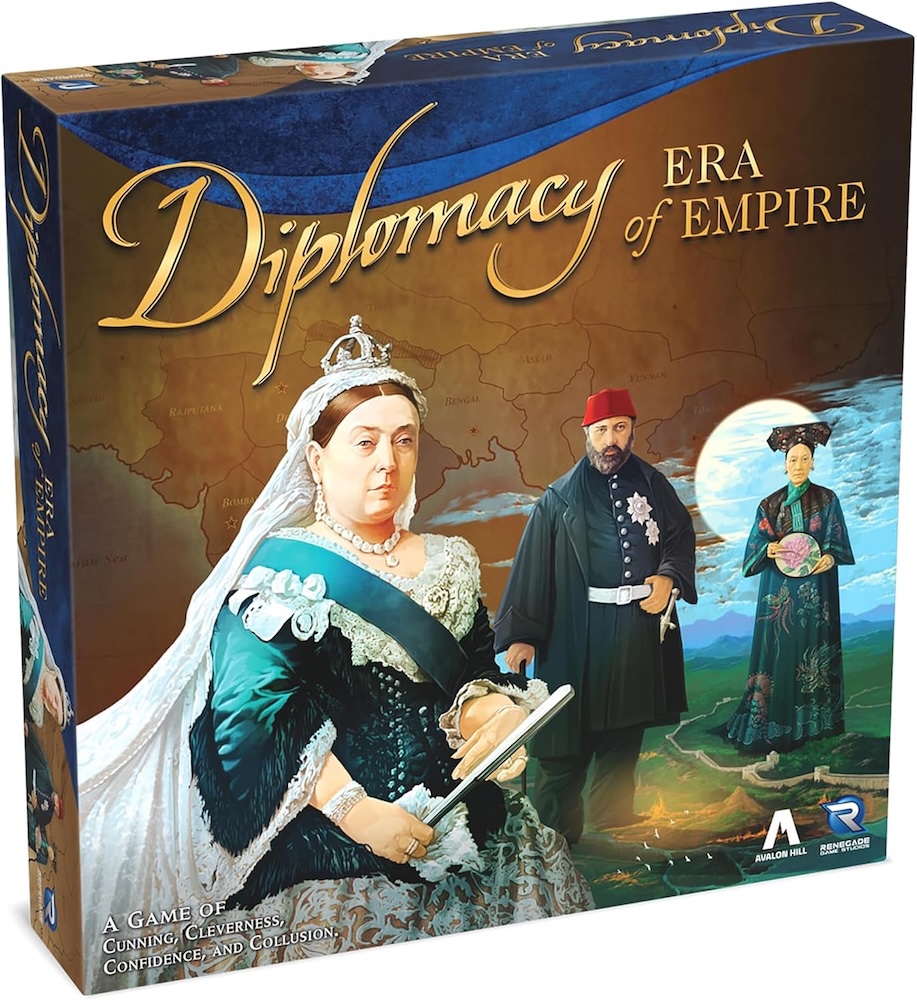
Want the historical setting with longer gameplay? Pick up the original board game and its sequel set in the Ottoman Empire. Master diplomatic negotiation and outmaneuver opponents through negotiation and tactical alliances without relying on the random chance of dice.
In the original Diplomacy, you’ll navigate early 1900s Europe as one of seven Great Powers competing for continental supremacy through shifting borders, maneuvers, and betrayals. In the Era of Empire, experience a pivotal age of imperialism and compete for dominance across the Ottoman Empire, the Indian subcontinent, China, and the East Indies.
Please note that BoLS may earn a commission when you purchase through links on our site.
Don’t Miss:


Managing editor and pop culture writer that has been on the BoLS team since 2012. Vertigo Comics, Batman, and dystopian sci-fi fan. Enjoys bad movies, LEGO Technic, and the internet. Hates rom-coms. (she/they)
Read more at this site