

The Spelljammer setting is officially coming to the fifth edition on August 16th, 2022! Spelljammer: Adventures in Space will contain three books and includes everything from player options to an adventure designed for characters of levels 5–8. If you can’t wait until August to launch into Spelljammer action, keep an eye out for the free introductory adventure Spelljammer Academy coming to D&D Beyond in July. All you will need is a D&D Beyond account to play so sign up today!
For those that don’t know, Spelljammer is more than a D&D setting that allows players to hop in magical ships, traverse intergalactic causeways, meet all types of weird creatures, and visit destinations beyond their wildest dreams. Well, actually, that’s exactly what Spelljammer is. In order to prep you for your space-faring adventures, we’re going to take you through a crash course of what any good Spelljamming adventurer needs to know before they launch into the expanse of space.
A note on the information in our course
This article contains mechanics and setting information that pertains to the original AD&D version of Spelljammer. While fifth edition’s Spelljammer setting is drawing inspiration from AD&D’s version of Spelljammer, the information discussed may or may not apply to the new version. What? You don’t trust 30 year old information to help you navigate the deadly vaccuum of space? Adventurers these days, I tell ya.
Lesson #1: So you want to go to space

First, you’re going to need to forget everything you know about space. Are you done? Okay, let’s move on.
Space in Spelljammer isn’t real space. It’s a sort of magic space, commonly known as Wildspace. Once you leave the atmosphere of whatever planet you’re on, you’ll enter a vast, deadly vacuum, much like what happens when you leave a planet in real life. Or at least I think that’s what happens, having never personally left a planet. There are two key differences between real space and Wildspace that we will be covering in our crash course: air pockets and gravity.
Air pockets
Wildspace can be traversed by anyone or anything that leaves a planet’s atmosphere. This is because objects that enter Wildspace from a breathable atmosphere take small pockets of air with them that they can use for … well … breathing.
Unfortunately, smaller creatures leaving a planet’s atmosphere only bring a couple of minutes worth of oxygen. Once the fresh air from their air pocket runs out, they will only be able to hold their breath for 1 + their Constitution modifier minutes before they begin suffocating. In order to not be dead after a few minutes of venturing in Wildspace, you need to exit the atmosphere with a large enough vessel to contain enough fresh air for your trip. We’ll talk about these space-faring vessels, eponymously named spelljammers, in the next lesson. For now, let’s talk about gravity.
Gravity
The second key difference between real space and Wildspace is that in Wildspace everything has its own gravity. “But,” you say, your finger pointing into the air, “everything already has gravity.” Before I answer this question, didn’t I tell you to forget everything you know about space already?
In Wildspace, everything has the gravity equivalent to the standard measurement of the Material Plane’s gravity. If you are near an object that is bigger than you while in Wildspace, you will be drawn toward it. The gravity of an object is determined by its longest axis. For instance, if you were walking on a sphere floating through space, you wouldn’t feel any difference in gravity when you moved around. If you were walking on the broad, long face of a rectangle, the gravity of the object would allow you to flip around to the other side of the rectangle and walk “upside-down” when compared to your starting position … I think…
Lesson #2: Getting to know your spelljammer
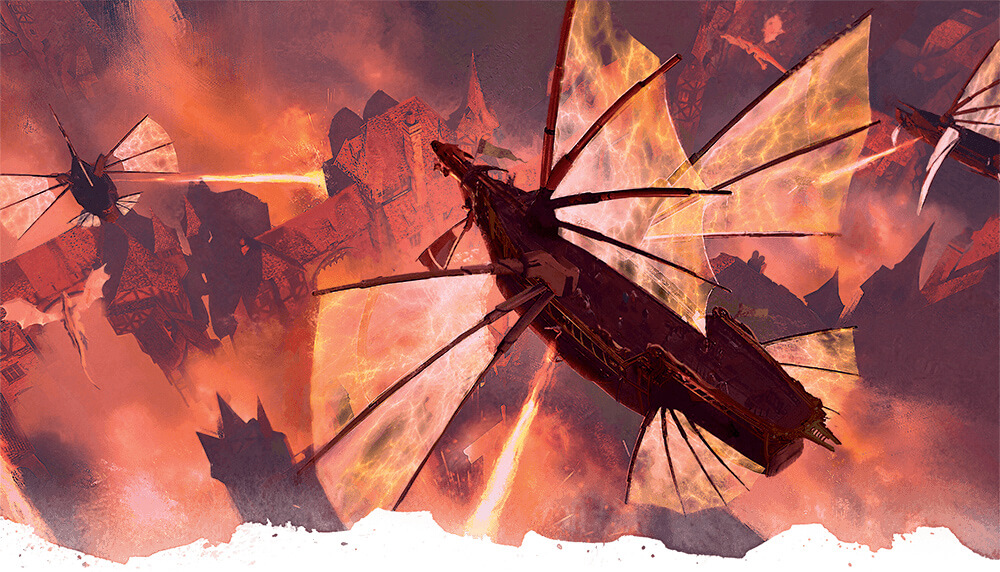
The most effective way to travel through Wildspace is to use a ship specifically built for such a purpose. Spelljammers have similarities to naval ships in the sense that they are long vessels with an open deck. They frequently feature sails that can catch the wind—or in Spelljammer’s case, a mystical and rather flammable current of ethereal energy called phlogiston—in order to move the vessel more efficiently.
Spelljammers are typically captained by a spellcaster who uses their magical powers to make the ship fly through atmosphere and Wildspace alike. The spellcaster in charge of making the ship move sits in a throne-like device known as a Helm. The Helm allows the spellcaster to take full control of the ship and fly it with a combination of their mind and magical ability.
Because spelljammers are such large vessels and are specifically designed for interstellar travel, they usually contain an air pocket that can last its crew months of travel in the vacuum of Wildspace. Another reason spelljammers are built similarly to naval ships is that the shape allows creatures to walk on the deck of the ship (its longest axis), because of the strange physics of Wildspace.
The purpose-built functionality of spelljammers makes them the most effective way to travel Wildspace, and a necessity to travel the multiverse.
Lesson #3: Exiting your comfort zone (and galaxy)
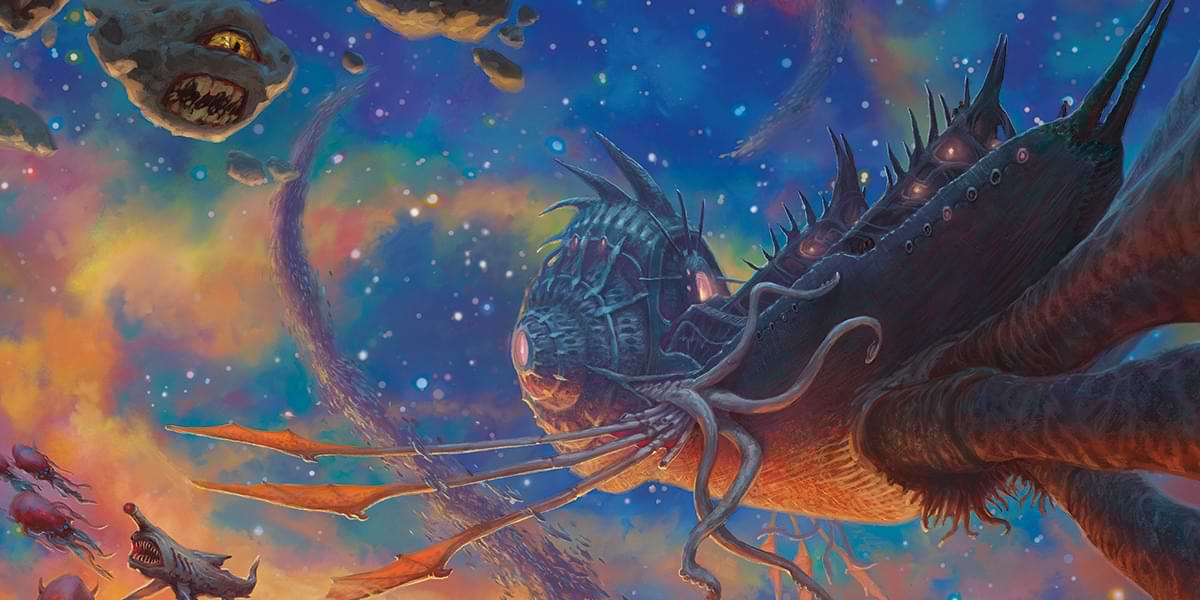
Surrounding the observable universe of your D&D campaign is an impenetrable crystal sphere made of a pitch-black, ceramic material. But, we all knew that. What you might not know is that the crystal sphere containing your universe is, in fact, penetrable, if you know the proper spell.
These crystal spheres are more than just a collection of stars and planets. Even the essence of magic and the power of deities are contained within the crystal spheres. One cannot teleport beyond the reaches of a crystal sphere, and clerics who traverse the cosmos may be terrified to learn that their deity’s power can only work from within a crystal sphere where their deity has influence.
Outside of the crystal spheres, rivers of ethereal energy, known as phlogiston, flow to and from the infinite number of crystal spheres that make up the multiverse. Traveling between these spheres can take hundreds of days and is extremely dangerous. The danger comes not only from the phlogiston, which is highly flammable, or the vast and deadly vacuum of space. Pirates and dangerous beasts roam these intergalactic causeways, looking for their next paycheck or meal (sometimes both).
In the deep reaches of space, you will find innumerable worlds, each stranger than the last. These fascinating worlds are what draw droves of adventurers to travel beyond their own galaxy. Riches, powerful magic, and dangerous knowledge await those that survive their perilous journey beyond the boundaries of the crystal spheres.
Lesson #4: How to win friends and influence aliens
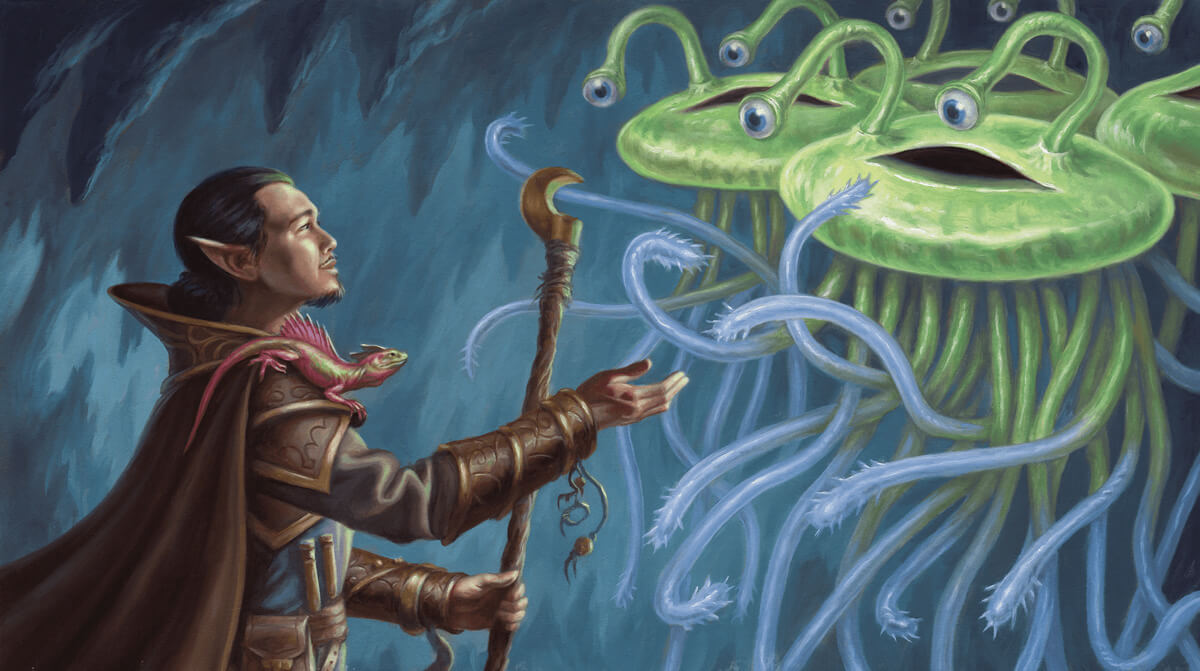
As one would expect for the far reaches of the multiverse, you can meet some pretty strange and wonderful creatures while exploring Wildspace. Interacting with and understanding these creatures can be a bit of a crapshoot. While traversing between planets and crystal spheres, you’re just as likely to run into a hippo-human hybrid that will help you fix your ship as you are a squid-faced, brain-worshiping telepath that tries to bite a hole in your skull.
Spelljammer is known for its colorful cast of both player and non-player characters. Here are a few that you’re likely to run into during your travels:
Giff
The hippo-human hybrids that I mentioned earlier—that you thought were merely a hyperbole for how ridiculous Spelljammer can be—are real and are called giff. These monstrously large creatures are seasoned travelers of Wildspace and, despite their menacing frame, are actually stronger than they look. Beyond their strength and imposing appearance, the giff are known for their affinity for firearms. No one is sure why or how the giff have taken such a liking to what some would consider an “uncivilized” weapon, but one thing is for sure: if you ask them about it, they will probably shoot you.
Gith and illithids
Pioneers of Wildspace and interstellar travel, we’ve actually been introduced to gith and illithids in fifth edition already. Gith, and their rather long history involving the illithids, are outlined in Mordenkainen’s Tome of Foes which does a much better job than I do at detailing the intricacies of their relationship.
These two species have been dreadful enemies ever since the illithids enslaved the gith for generations. Though the gith overthrew their illithid captors eons ago, they aren’t exactly on great terms and tend to kill each other on sight. I’m confident they will work out their differences … eventually.
Both the gith and illithid are masters at navigating the Wildspace. Originally, the illithid created the technology required to travel between worlds, combining Wildspace-worthy ships and their psionic powers. During the war between the gith and the illithid, the gith managed to acquire some of the illithid technology and reverse engineered it to create their own space-faring vessels. Some believe the original ships invented by illithid’s are the foundation for spelljammer ships we see today.
Autognomes
Like most species, gnomes are always looking for a way to buy some extra time. Fortunately for gnomes, they’re smart enough to build themselves mechanical beings that work wonderfully as both loyal companions and replaceable cannon-fodder.
These mechanical beings, called autognomes, can sometimes experience a glitch or become permanently separated from their creators. The autognomes that survive such an event for long enough usually turn into fully sentient beings capable of their own thoughts and emotions.
Thri-kreen, hadozee, space dragons, giant space hamsters, and the rest
By this point, you probably get it. Spelljammer is full of wonderfully whacky (and devastatingly deadly) creatures. From giant space dragons that do dragon things (in space!) to giant space hamsters that were genetically engineered to power gnome spelljammer ships, you never know what you’ll run into while you tour the vast expanse of space.
If you’re unsure of what creature you have encountered on your travels, I recommend the classic and timeless greeting of falling to your knees and begging for your life.
Get 10 Spelljammer creatures today!
Monstrous Compendium Volume One: Spelljammer Creatures is now available on D&D Beyond! This collection provides stat blocks and information for five new and five returning space-themed creatures, including the asteroid spider and the eldritch lich. Sign up today to check them out and use them in our Encounter Builder tool!
So long, and thanks for all the gith
Well, you should be good to blast off for Wildspace now. As I said, Wildspace isn’t real space. You don’t need decades of schooling and hundreds of hours of simulations to get up there. Wildspace is a place where any adventurer that possesses a magical ship can launch themselves into the cosmos and find wonders beyond imagination, or an extremely painful death. Or both!
Mike Bernier (@arcane_eye) is the founder of Arcane Eye, a site focused on providing useful tips and tricks to all those involved in the world of D&D. Outside of writing for Arcane Eye, Mike spends most of his time playing games, hiking with his girlfriend, and tending the veritable jungle of houseplants that have invaded his house.
Read more at this site