

In a recent interview, Hasbro CEO Chris Cocks outlined a future where D&D works around a “live service” model of releases.
Five years on from Wizards of the Coast becoming the head of Hasbro’s ‘digital ambitions’, and Hasbro’s CEO still wants you to think of D&D as more like a video game than a traditional pen & paper RPG. In a recent interview with GamesRadar, Hasbro CEO Chris Cocks spoke about how “it just makes sense” for players to consider D&D from a live service framework.
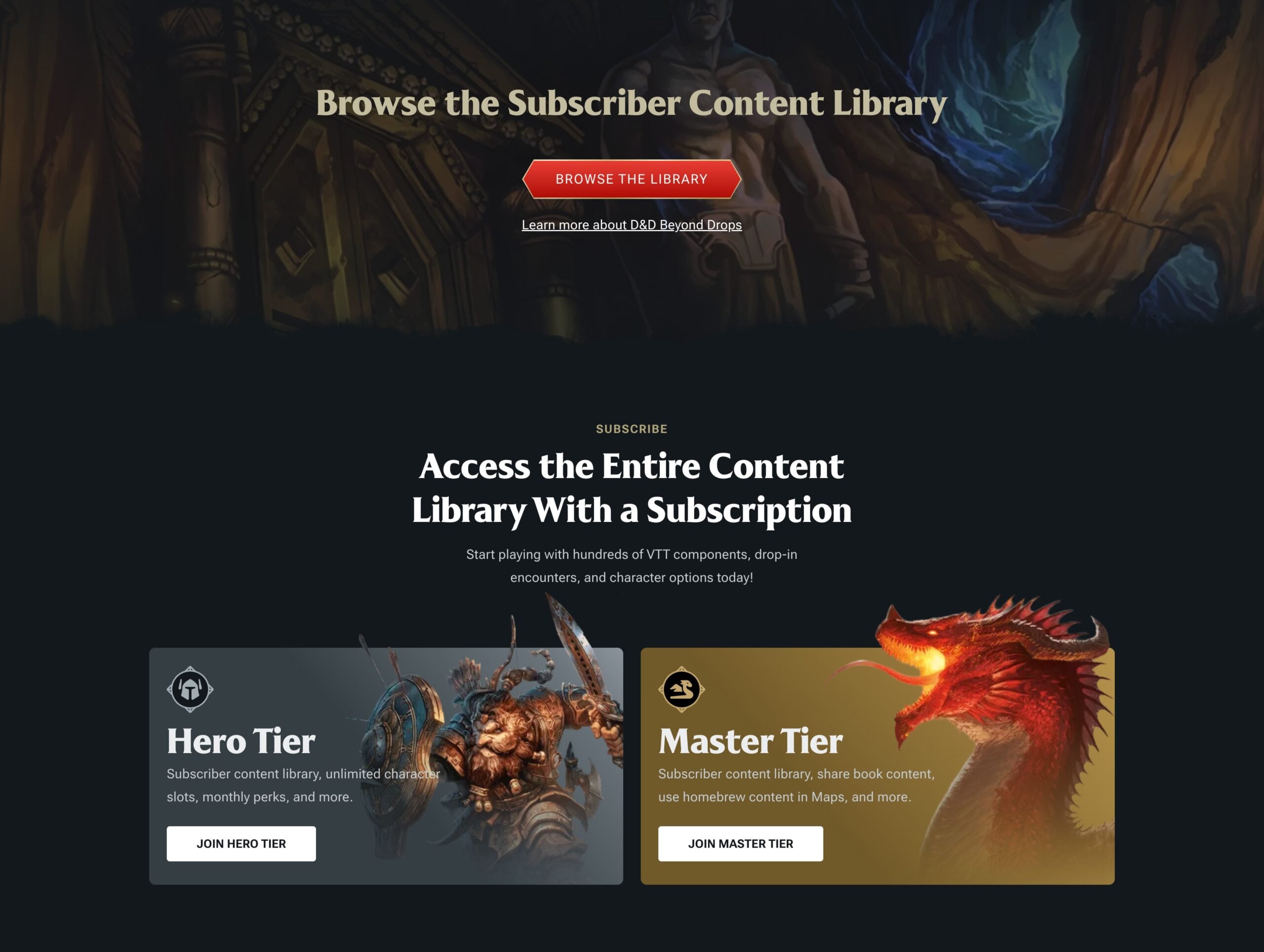
This seems to line up with two new initiatives at WotC, with a ‘seasonal model’ of themed-product releases all sort of coalescing around a single big moment. And then D&D Beyond’s new ‘Drops’ weekly “drops” of different items, both new rules (that don’t necessarily fit anywhere else), and digital cosmetics to upgrade your D&D Beyond account. As long as you’re subscribed.
Of course, that all depends on players “migrating their thinking” as Cocks puts it, to look at D&D as something you collect piecemeal without having to wait so long between releases. Though many feel Cocks is missing the mark here, it’s not that players want a steady stream of releases (despite how good it would be for the quarterly numbers), they want something that makes them excited to play D&D.
D&D As Live Service – What Does That Mean, Exactly
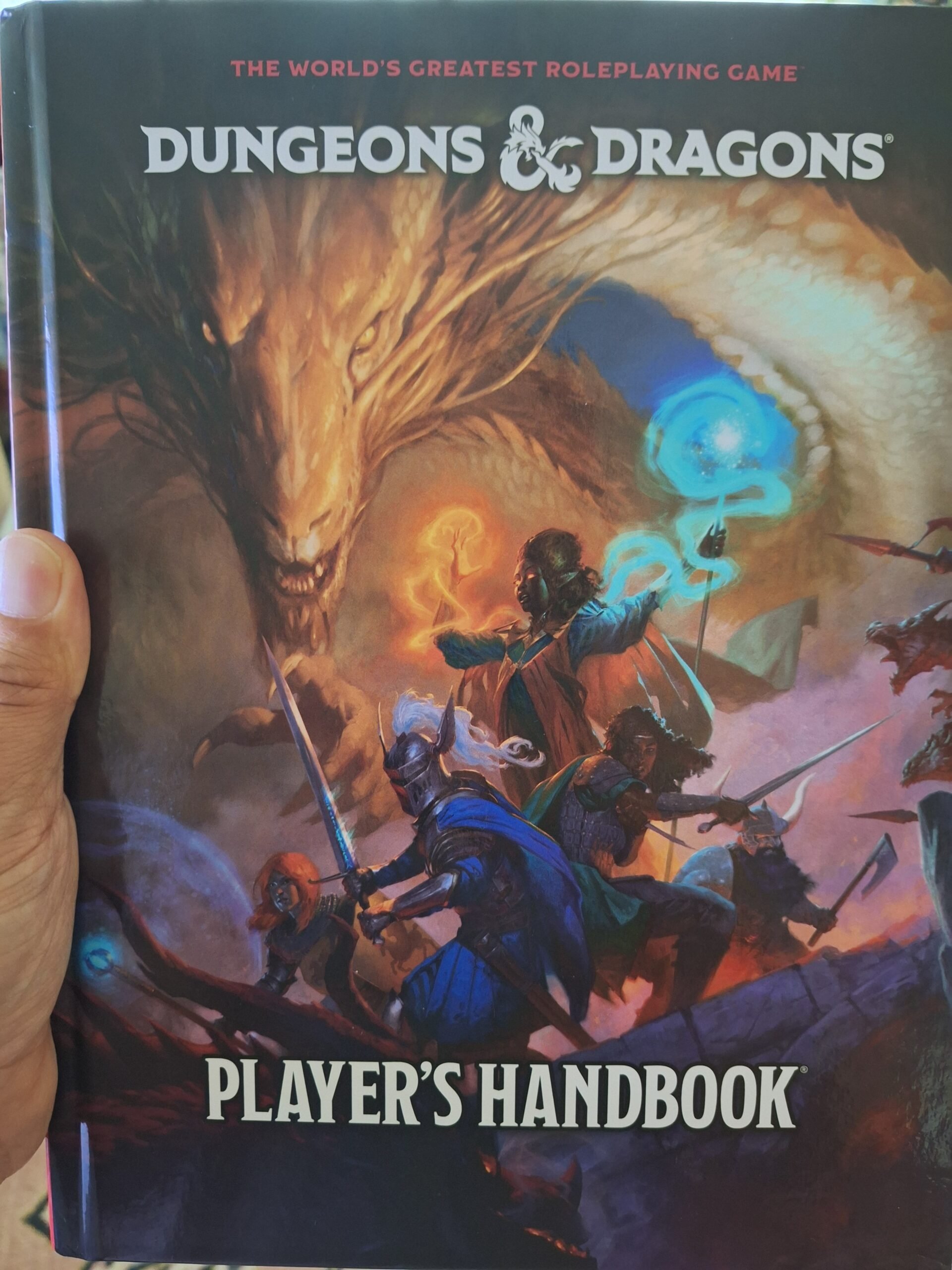
Speaking to GamesRadar, Cocks outlined some of the thinking about the changing nature of D&D. Because, and let’s be clear, any RPG that’s still getting stuff published for it, still being updated and changed is technically a “live service” if you think about it. D&D has, from some standpoints gone gold and then some, releasing its 1.0 back in the 70s. Since then, it’s had major update patches and we’re currently on update 5.5.
But I think this is where some of the chafing comes. Because, yes, you can think of D&D like that – but it invites cynical comparisons to predatory live-service games built on microtransactions. Which, coupled with a move towards more ‘piecemeal releases’ can be a little troubling.
Cocks seems aware of this, and is quick to say that D&D books will always be important. But to him, they’re more like “totems”:
“Books will always be an important part of D&D. It will always be kind of like a special totem that you can collect. I have a big bookshelf of D&D books myself. But we see what’s happening – almost everyone who plays D&D uses D&D Beyond, like a super high percentage uses it. A very high percentage use Foundry VTT or Roll20, and so it just makes sense that you should start to migrate your thinking about the way you play to more of a live service where you don’t have to wait 18 months for us to build a book.”
Advertisement
Instead, Cock asserts that players could get components or aspects of a release as they come out: “We can start to release components or aspects of [a D&D] book over time, and you don’t have to buy everything all at once, you can buy chapters or segments of it over time.”
And that sentiment is already sort of in action with D&D’s switch to a ‘seasonal model’ with the big D&D books being the centerpieces around which the rest of the ‘segments’ are released. Or look at D&D Beyond’s new ‘Drops’ which offer up little “nuggets” of new stuff.
D&D’s ‘Ta-Da’ Moments
But in these models you can also see some of the problems. Case in point, D&D Beyond’s Drops has stirred up its users and subscribers who expressed their disappointment that the new rules being released through the program couldn’t be shared (the way all the D&D books can be) with people who have an account for sharing.
If you want to try the new Pact Seeker feats, for instance, you’ll need to have either a Hero or Master tier subscription with D&D Beyond. You can’t just buy them individually – which means that over time, those player options can become more expensive than the price of a single book.
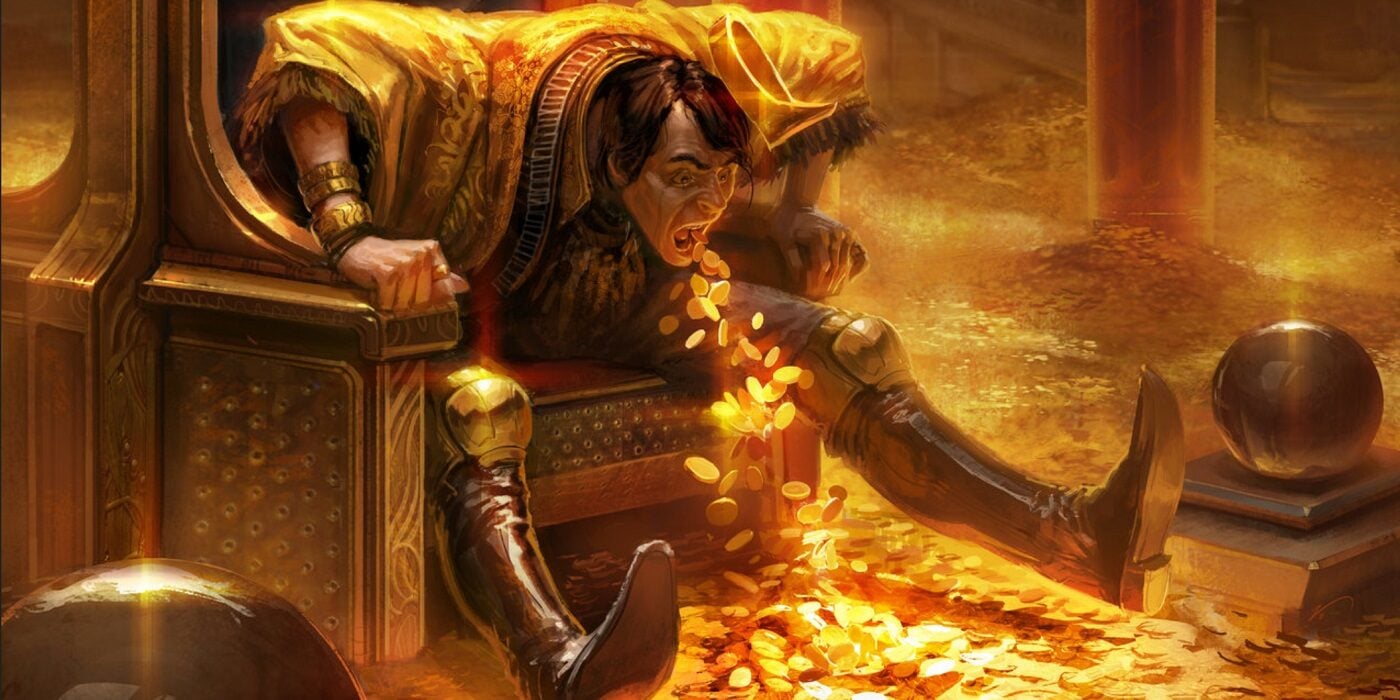
And while that’s just one aspect of it, it does invite the question – how much will it cost to buy a book in segments as it’s being finished? Is there a world where you might pay more per chapter than you would if you just waited until the whole thing was out?
It’s a valid question. And one that corporations, in general, have an answer to. You need only look around at how every other live service is shaking out to get an idea of why some are concerned. It all comes back to the term Cory Doctorow uses to describe platform decay around the world: enshittification. Basically as live services go on, their user experiences tend to fall off, cutting corners in the name of profit. But D&D is different in that for all that people use the digital tools, the second they become hard to use, there’s still a whole physical world that ‘supports live play’.
What do you think? Is D&D possible as a live service?
Don’t Miss:

Read more at this site