

Kobold Press CEO and Kobold-in-Chief, Wolfgang Baur, is here to give you some insight on the state of the industry!
Though I work in the pro tabletop industry, I have always been a huge fan of homebrew game material, and I am not alone.
Sure, there are reasons to love published adventures and settings and player options. Mike Shea defended them well ten years ago in the Case for Published Adventures, which I can summarize as, “professionally produced adventures have resources and strengths that are not available to home brewers, and they deliver a quick, easy, fun game with less work by the GM.”
He’s 100% right about that, but I often still wind up playing homebrew. Heck, looked at in a certain light, Dungeons & Dragons and the whole tabletop RPG field exists because a bunch of wargamers homebrewed some rules for wizards, spells, and trolls.
Here’s why I often prefer to brew up something for the players.
Homebrew is Optimized for Your Player Group
Lots of published adventures make a guess about party level, composition, and play style. A tier 1 adventure for fifth edition will work for low-level play, and the experience is likely to work most of time.
However, your table might differ from the “typical party.” You might not have a healer, or you might be all elves and gnomes, or you might be a group of mercenary, highly optimized murderhobos who NEVER investigate a murder mystery or save a kidnapped villager unless they know what’s in it for them. Not that I know any of those groups.
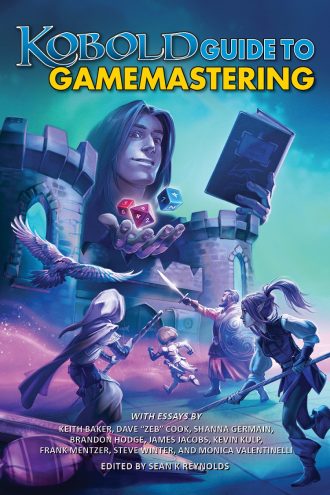
The thing is, new GMs sometimes assume that a published adventure will solve their table problems: the guy hogging the spotlight, the quiet player, the roleplayer whose intentionally suboptimal character is a burden for everyone else to keep alive. (There’s advice for all those sorts of issues in Kobold Guide to Gamemastering but the tl;dr is “talk to your players about the game.”)
The advantage that new GMs and veterans have in homebrewing is that you KNOW your players. You can leave the red herring, set up the taunt that triggers the bar brawl, or place the treasure that is going to make the elf cleric FREAK OUT because it is from her backstory.
You can delight your players with homebrew, because those people around the table will often tell you exactly what they are hoping for with their characters. You just have to ask “Hey, what does your character really want to accomplish as a Big Dang Hero?”
Homebrew also lets you easily drop in current memes, in-jokes, favorite tropes, hated rivals, crazy random NPCs, and so forth. The trickster gnome bandit who stole the party’s gold and potions back when they were all apprentices and farm kids might come back. Repeatedly. To rob them of every trophy or ribbon or medal. Or just to mess with them.
Sometimes, homebrew is just the sweet cream of improv that you bring back as a recurring theme. Think of it as your home game’s catchphrase, tagline, or calling card: that one weird gnome or the cleric who never speaks, but always has a quest for the party.
Homebrew: the Honey Badger of Making Stuff Up
Unlike published adventures, there’s no editorial or cultural “middle ground” in homebrew. All options are available, including bad and bizarre ones.
You can choose to make all burrowing mammals into gnome-haters. You can say that paladins, rangers, wizards, and druids all can speak with animals, but only with companion animals, mounts, and familiars.
Really, it’s as weird as you want. Or it can be as traditional, folkloric, and homespun cozy as you want. Large RPG companies make their money by appealing to the widest possible range of broad tastes, so they avoid doing anything too niche. Homebrew doesn’t care about any of that. It just needs to be good times for your friends.

Masonic dwarves. Isekai plots. Dread walkers from beyond space and time and their eonic keepers. Pirate-zombie romance! Talking dragons who need help with a heist! Goblin chefs seeking the perfect mango in a deadly tropical orchard that belongs to the snake cult your paladin fled as a child!!(!)
Published adventures are often fantastical. However, if you like really REALLY weird fantasy and think Game of Thrones and Star Wars are too ho-hum, the homebrew honey badger has a game for you.
Homebrew is Yours, Warts and All
Part of the fun of homebrew is the brewing. Daydreaming, worldbuilding, naming funny little characters or earthshaking horrors, futzing around with weird maps, making up a sequence of clues, or writing a villainous monologue—this is fun creative work for many GMs, and an underappreciated part of the hobby.
Then players come along and either ruin it all or wallow in a joyous appreciation—an adventure made just for them and you. It’s hard to beat the joy of a heroic story that no one else has ever told, that you share with friends, that is your creation and your jam.
Your players won’t know what’s coming, because it’s not published anywhere. You can experiment with fancy handouts, digital displays, projects, sound tracks, or stick with the pure oral tradition of “You see a green-skinned plantlike creature in the clearing, waving in the breeze.”
Put some weird spin into your game by making it the product of daydreams, inspired by Croatian fairy tales, or retelling the story of your family’s visit to a Museum of Natural History or being inspired by a movie. Would your campaign be livelier if your party was suddenly in, say, Pearl Harbor or the Walking Dead? It’s up to you!
Homebrew is all about YOUR imagination, your preferred play style, and YOUR shared story with friends, not something outsourced to the professionals. It’s great to enjoy a big Hollywood blockbuster, but there’s also something great about a video of you and your gang, getting up to mischief or exploring or sharing news. RPGs are social, quirky, and at their best when they reflect your tastes, your imagination, and your story—that’s why the majority of campaigns are homebrew!
Brewers, you are in the best of company.
Open Call: Tell Me About It
Ok, time to put forward a crass bribe. To encourage people who roll their own, I will shout out at least FOUR homebrew monsters, adventures, heroes/villains, or even super-low-budget PDFs on DriveThruRPG.
Tell me about your homebrew rule, adventure, or other RPG thingamajig!
I will promote and send prizes from the Kobold Treasure Vault. Submission deadline is Friday, May 29, and I will send responses and shoutouts in June.
As usual, Kobold Press makes no claims of ownership on your thing, no purchase required, odds of winning depend on number of entrants, void where prohibited, etc.
I just want to see what people are doing and spread the word about anything that catches my eye. Brew on!
Read more at this site