

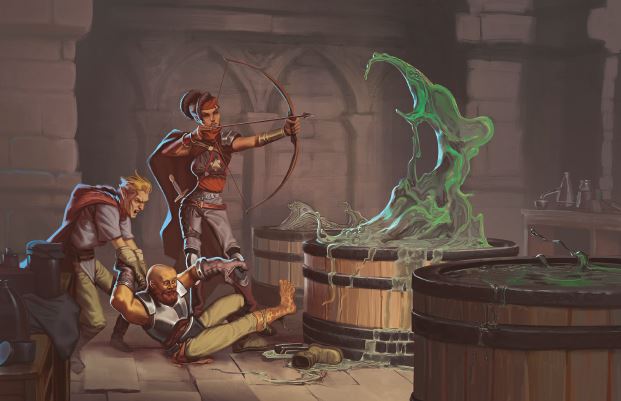
When your gaming group shares stories about their favorite gaming moments, nobody ever says, “Hey, remember that time we stumbled across that orc encampment, and there were precisely the right number of them to fight, so that we felt a little threatened but not really too much?” “Oh yeah, I drank a minor healing potion! EPIC!”
Balance is good. And that means it’s the enemy of perfect. Let it go.
Read all The 4th Pillar articles!
Consumer Culture
While consumables can affect matters of balance in your campaign, let’s talk about how they can change the overall fun-level of your game. Potions, scrolls, and other consumables are things that linger. They linger on character sheets, and they linger in the backs of the minds of players and the GM. The real conundrum of consumables comes not from which ones to use but whether to use them.
Consumables are easily hoarded in a lot of campaigns. Players think, “Oh, I need to save this for later,” or, “We can handle this. We don’t need to use those yet!” They get saved for the big bad guy or just the next encounter.
These encounters are figments though. “Next time” is a revolving door. I seen characters die or reach 0 HP before the potions ever get brought out.
You might think that these un-quaffed potions, the scrolls yellowing in their cases, the special ammo rusting in satchels, is no big deal. However, the GM might be designing encounters around these things. But since players are worried they won’t get more, consumables get treated like priceless artifacts. That’s rarely the case, but it’s a mentality problem. Anyone who’s ended a JRPG with 99 phoenix downs knows it.
Potion Policies
A way to avoid potion hoarders is to establish what’s to be expected of them during Session Zero. Here are a few other ways you can handle potions in your game:
- Rechargable. Give consumable items doses or charges that can be refilled. You could also allow for them to be recharged when characters meet certain in-game constraints, such as visiting a magical font, resting in the forest, taking a life, or doing something generous.
- Use It or Lose It. Potions expire, and scrolls lose their potency. Randomly set an expiration date 1d10 days from when they’re found.
- Metabolization. Potion effects might not be immediate. You could rule that potion effects only kick in 1d6 rounds after they’re consumed. You have to decide early whether you’re going to commit.
- Side Effects. Most games have a slew of status effects, afflictions, or impairments that might befall players when they quaff a concoction. This can make choosing when and how to use them mean more.

Balance Baubles
Consumables can make an impact on the overall difficulty of your campaign. A potion of invisibility might take something that seems impossible and bring it into the realm of likely success. Or a potion of cat’s grace might make leaping from pillar to pillar to reach a lever that shuts down the damaging hazard a breeze.
They also make imbalance in your encounters feasible, but players will probably need some prompting to think of them in this way. If a character obtained that potion of cat’s grace three sessions ago, they player has likely forgotten about it. Instead, place those potions just before or within the encounter where you want them to use it. Lead the horse to water and hope that they’ll drink! In this analogy, your players are horses. I’m sorry.
Potions aside, unique magic items that seem pointless now, yet prove to be immensely useful in a pinch are another fun way that you can use consumables to even the playing field. Maybe they discover a set of greaves on a skeleton in a dungeon that endlessly produce sweet rolls if you reach your hand inside. Aside from not-starving, this might seem pointless until they need to win over an alleyway full of spunky orphans or a hungry pack of wolves.
Up Next
Next time, I’ll give some advice on how to stick to the rules in case you’re not on board yet—or more likely, if you’re a new GM. Beyond that, I’ll show how you can outline a nicely imbalanced campaign with some themes to stick to and ones to avoid.
Read more at this site