

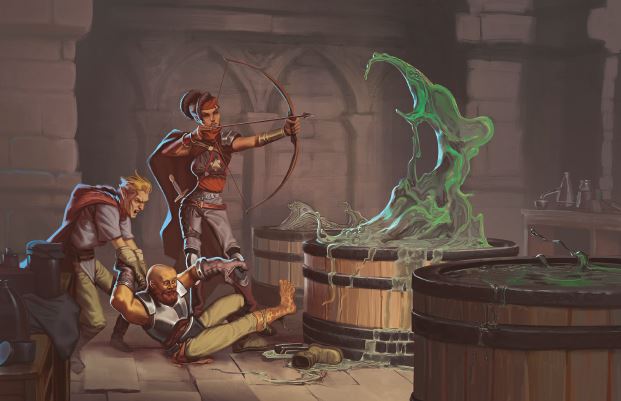
When your gaming group shares stories about their favorite gaming moments, nobody ever says, “Hey, remember that time we stumbled across that orc encampment, and there were precisely the right number of them to fight, so that we felt a little threatened but not really too much?” “Oh yeah, I drank a minor healing potion! EPIC!”
Balance is good. And that means it’s the enemy of perfect. Let it go.
Read all The 4th Pillar articles!
It doesn’t matter what game you play. You can break all of its rules and go wild with how you use or ignore them. Take all of the best bits and run with them. What we’re talking about now is how exactly to begin doing that.
Now, there’re no formula for it, and I haven’t developed one myself—unfortunately, it’s all very unscientific—but I’ll lay out some ground rules for you. Bear in mind, there’re a lot of personal preferences and anecdotes here!
Start Simple
Off-the-rails games work well when there’s a stark contrast between the PCs and their opposition. I’m not saying that RPGs shouldn’t bother with nuance, complex villains, or complicated moral quandaries. You can run an excellent off-the-rails game using those elements. However, if this is your first rodeo, I’d stick to undead lich kings and armies of the undead or something easily answered in terms of, “But why are we killing them?”
Focusing on set piece items, monsters, and locales allows you to hone your skills for building these dynamic types of encounters we’ve been discussing. Think of your first imbalanced campaign as a testing ground for your craziest ideas. As time goes on, you can weave in more lore, history, and nuance, and all of this rule abandonment will come to you as second nature.
Completely Avoid Referencing the Rules
While it may be tempting to stop mid-action to make a rules call, it’s important in an off-the-rails game to NOT do that. As a GM, get a good degree of familiarity over the rules before running your first session(s), because the ability to dynamically make a call on how to solve something the rules don’t cover ensures you can keep the pacing and tone of the game you’ve begun to build. Running an off-the-rails game doesn’t work when you’re constantly referencing the rails you’re staying off of.
Encounters Should Be Deadly
Again, in an imbalanced campaign, make a lot of your encounters more trying. But that doesn’t mean you need to leave every single one of them with the party on death’s door. There’s a difference between exhausting resources and exhausting your players.
They should still get chances to feel powerful and in control. Just make sure that when you create encounter set pieces, there’s not only a sense of actual danger but that there actually is danger. Don’t fudge those die rolls!
Focus on Minutiae that Matters
A lot of games allow you to focus on things such as travel, living expenses, and upkeep. Counting arrows, pints of oil, feet of rope, and everything in between can be compelling, but it often isn’t.
You may want to focus on these things in your game only if they make the story more dramatic and not just another layer of bookkeeping. If the amount of lantern oil your characters hold is the difference between life and death because they spend a majority of their time in dungeons or other oppressively dark environs, then by all means focus on it.
However, the amount of gold per week spent on keeping your horse at the stable might be less compelling. In a game where you’re taking things off the rails and focusing on dramatic and deadly encounters, make sure that whatever players are tracking on character sheets—arrows, potions, bullets, or otherwise—that your players sweat when those numbers dwindle.
Make It Replayable
If you’re going to the trouble to put all of the work into building this world with your group, you may as well find ways to keep some of it unpredictable, even to you. If you are building out dungeons and locales, sometimes the main goals are set in concrete, but the journey from point A to B can still change a lot.
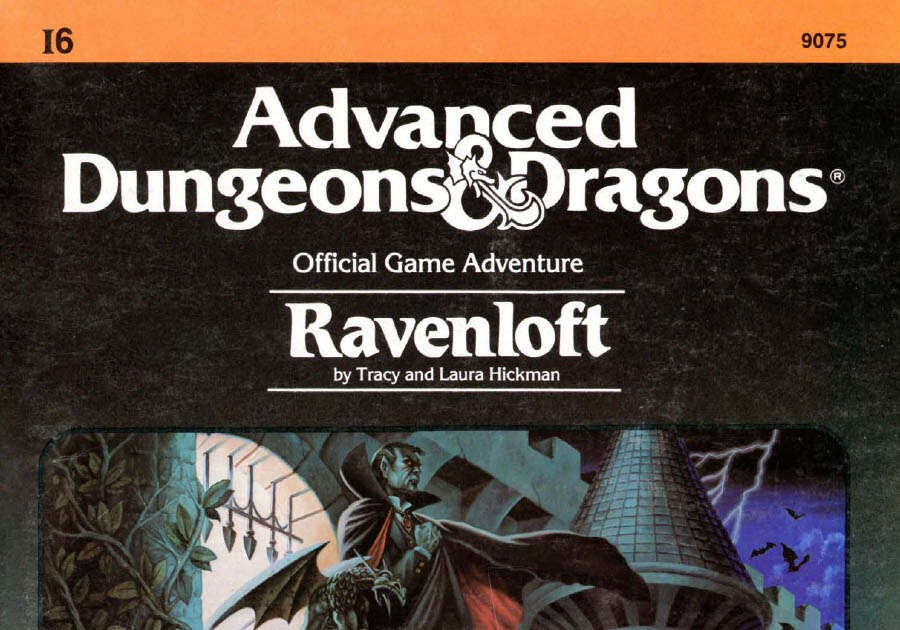
Take I6: Ravenloft as an example: this adventure does an excellent job of adding replayability by changing the locations of a few items and for the main antagonist. If you’re generating a labyrinth of caves, corridors, city streets, or basically any other locale, you can always come up with alternate areas that the players might encounter.
If you design ten but only put five to use, you can use the other five next time or randomly pick them to give players a false sense of security: “Ah yeah, the crypt is just past this antechamber. I remember from last time.” But then BAM, no crypt! This go-round, it’s an ossuary filled with bone golems that vomit molten bone marrow. Got ‘em!
Up Next
There are plenty of other guidelines for taking your game off the rails. However, at this point, I’m confident that having read this series this far, you’ve already begun to formulate a few useful ideas and are ready to start having some fun.
Speaking of which, we’re going to talk a lot about fun next time!
Read more at this site